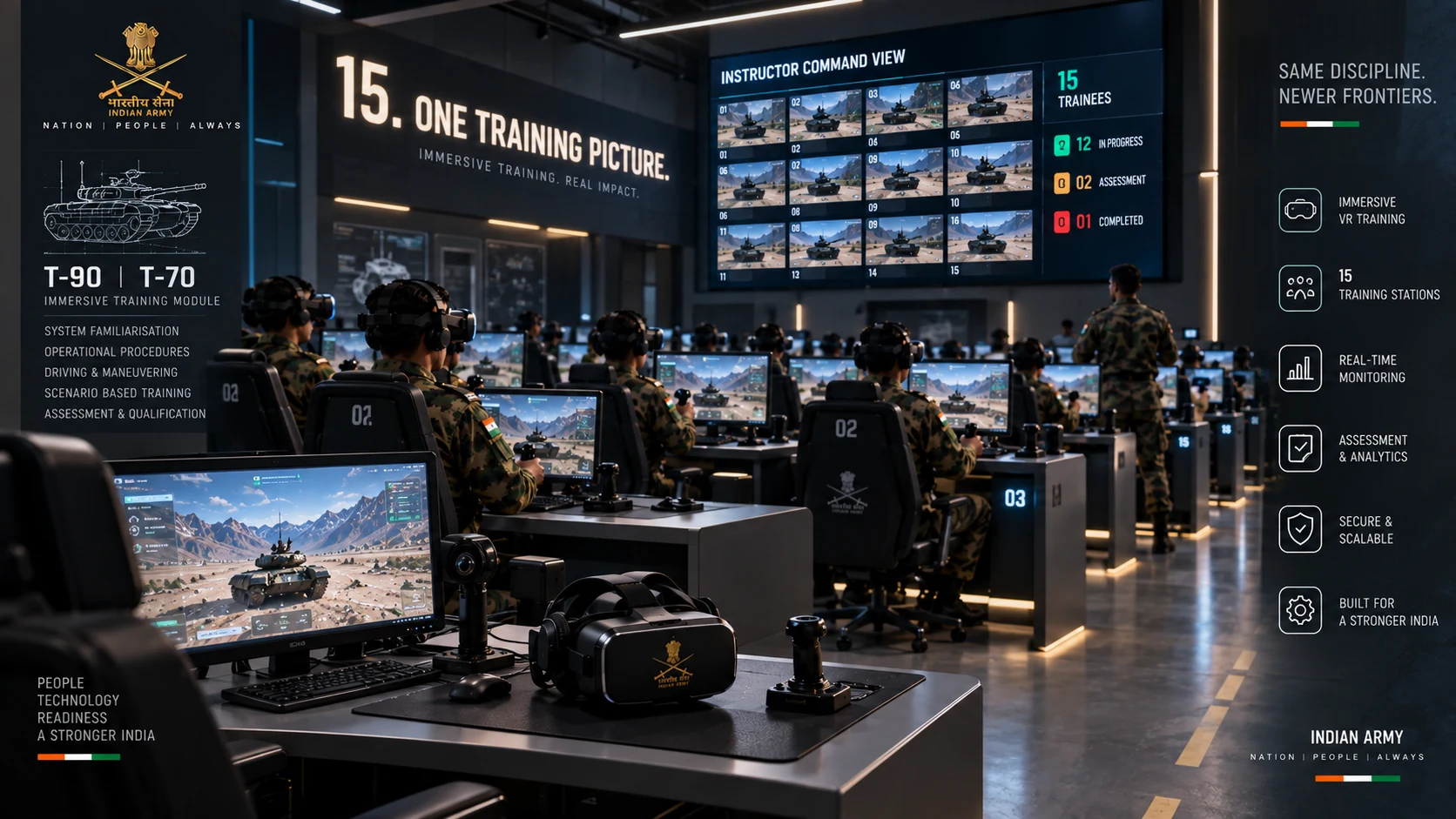
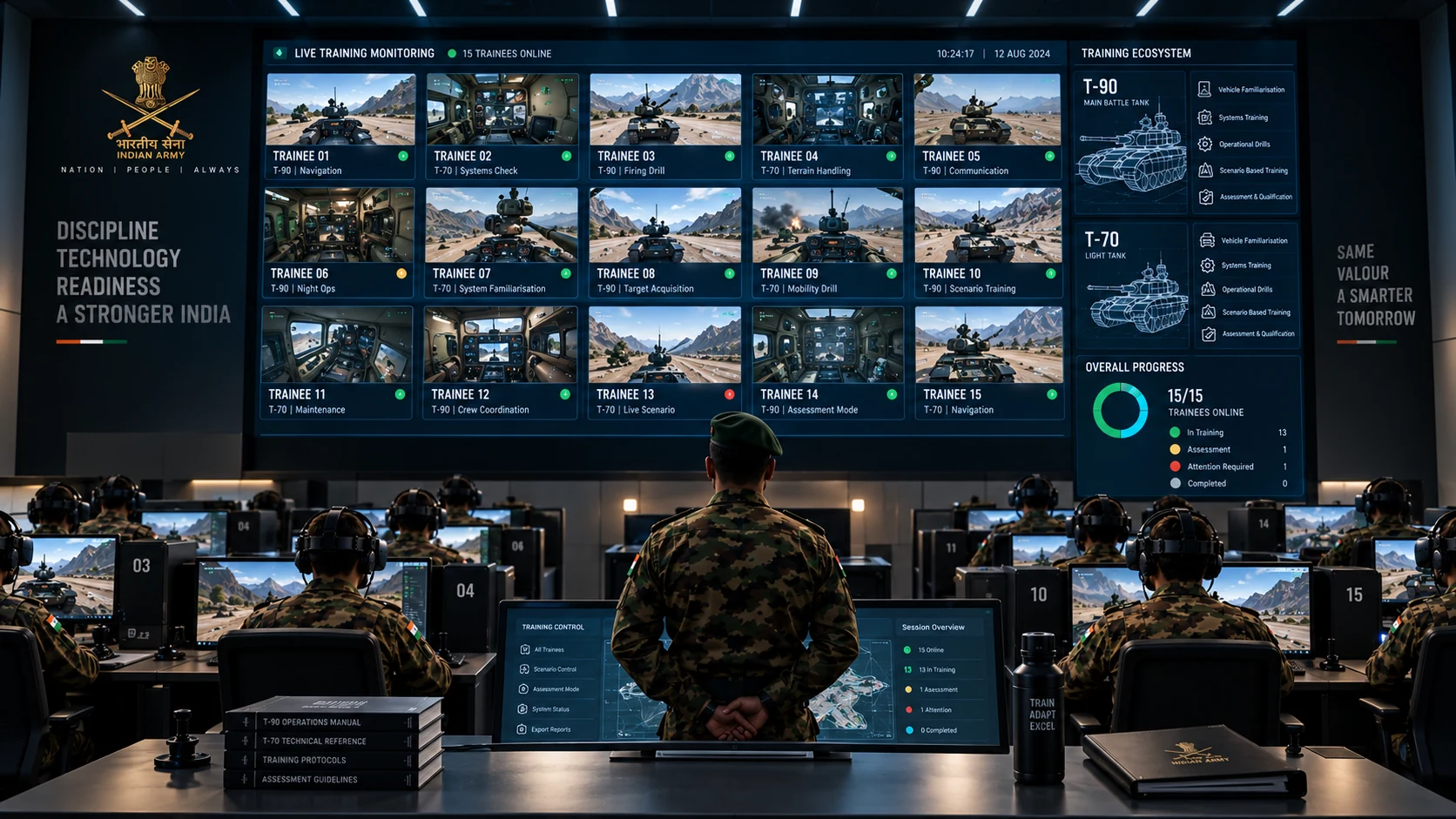
The immersive training room: rows of trainee stations with VR headsets facing the large central instructor display of the Immersive Training and Qualification Ecosystem
Case study Indian Army Defence · Immersive Training

Train before the battlefield.

Immersive Training & Qualification Ecosystem — an end-to-end immersive training environment designed to help Army personnel learn, practise and demonstrate competency before progressing toward physical training.

Client
Indian Army
Platforms
T-70 & T-90
Facility
15 high-end training stations · central instructor display
Role
Experience strategy · creative direction · immersive experience · content · stakeholder & team leadership
Scroll to read
What was built
An immersive VR training and qualification environment for Army personnel
Where
A dedicated training room set up with 15 high-end computer stations
Instructor view
A high-end central display showing what trainees were doing in their VR sessions
Qualification
Testing conducted inside the immersive environment
Stakeholders
Daily with the Major · weekly with the Colonel · Brigadier-level approval
02 Opening

From digital training to physical readiness.

This was an end-to-end immersive training environment created for Indian Army personnel, combining VR-based training, centralised instructor visibility and qualification testing within a dedicated training facility.

The experience created a digital preparation and qualification stage before personnel progressed toward physical training. Trainees learned and practised on the T-70 and T-90 inside VR, the trainer followed their sessions from a central display, and qualification was tested in the same immersive environment.

I drove the experience from strategy through execution — working directly with the Army's stakeholders throughout, and leading the team that brought the training environment to life.

03 Project leadership

Not just an experience. A training ecosystem.

I was involved in driving the experience from strategy through execution — translating Army requirements into an immersive training environment while coordinating the creative, content and delivery process.

I worked directly with the Major on a daily basis, collaborating on requirements, progress, feedback and iterations.

I worked with the Colonel on a weekly basis for reviews, alignment, direction and feedback.

At senior review level, I coordinated the work through Brigadier-level approval.

This placed me directly between the Army stakeholders, the experience strategy and the team responsible for bringing the training environment to life.

I was not handed a brief and asked to produce visuals. The work was to translate what the Army needed into an immersive training experience, take that experience back to the stakeholders for review, and coordinate the people and work required to deliver it.

  1. 01Army requirements
  2. 02Experience strategy
  3. 03Creative · content · immersive development
  4. 04Team execution
  5. 05Army review & feedback
  6. 06Approval
  7. 07Implemented training experience

Highlighted stages are where I led directly. Stakeholder relationships describe project collaboration, review and approval — not military command.

04 The opportunity

Before the battlefield, there is a learning curve.

Complex operational training requires more than information. Personnel need an environment in which they can learn, practise, repeat and demonstrate their understanding before moving into physical training.

The opportunity was to create an immersive digital layer that could sit between learning and physical training — allowing trainees to experience the training environment through VR while giving instructors visibility into the process.

Digital training Qualification Physical / battlefield training
The dedicated training room: fifteen high-end computer stations with VR headsets arranged in rows before the large central instructor display
05 The training room

15 stations. One connected training environment.

The 15-station training facilityDedicated training room · individual VR sessions · central instructor display

The physical foundation of the experience was a dedicated training room equipped with 15 high-end computer stations for VR-based training.

Each trainee could participate in an individual immersive session while a high-end central display gave the trainer a consolidated view of what trainees were doing inside their VR environments.

The result was not simply a room full of individual VR experiences. It was a connected training environment where individual immersion and centralised instruction existed together.

  • A

    15 high-end computer stations — one trainee, one individual VR session per station.

  • B

    Dedicated training room — set up for Army personnel as a purpose-built training space.

  • C

    High-end central display — the trainer's consolidated view of trainee activity.

  • D

    Two platforms — T-70 and T-90 experiences within one training framework.

06 The instructor view

Immersion for the trainee. Visibility for the trainer.

Immersive training can become isolated if the instructor cannot see what is happening inside the experience. This system connected both sides.

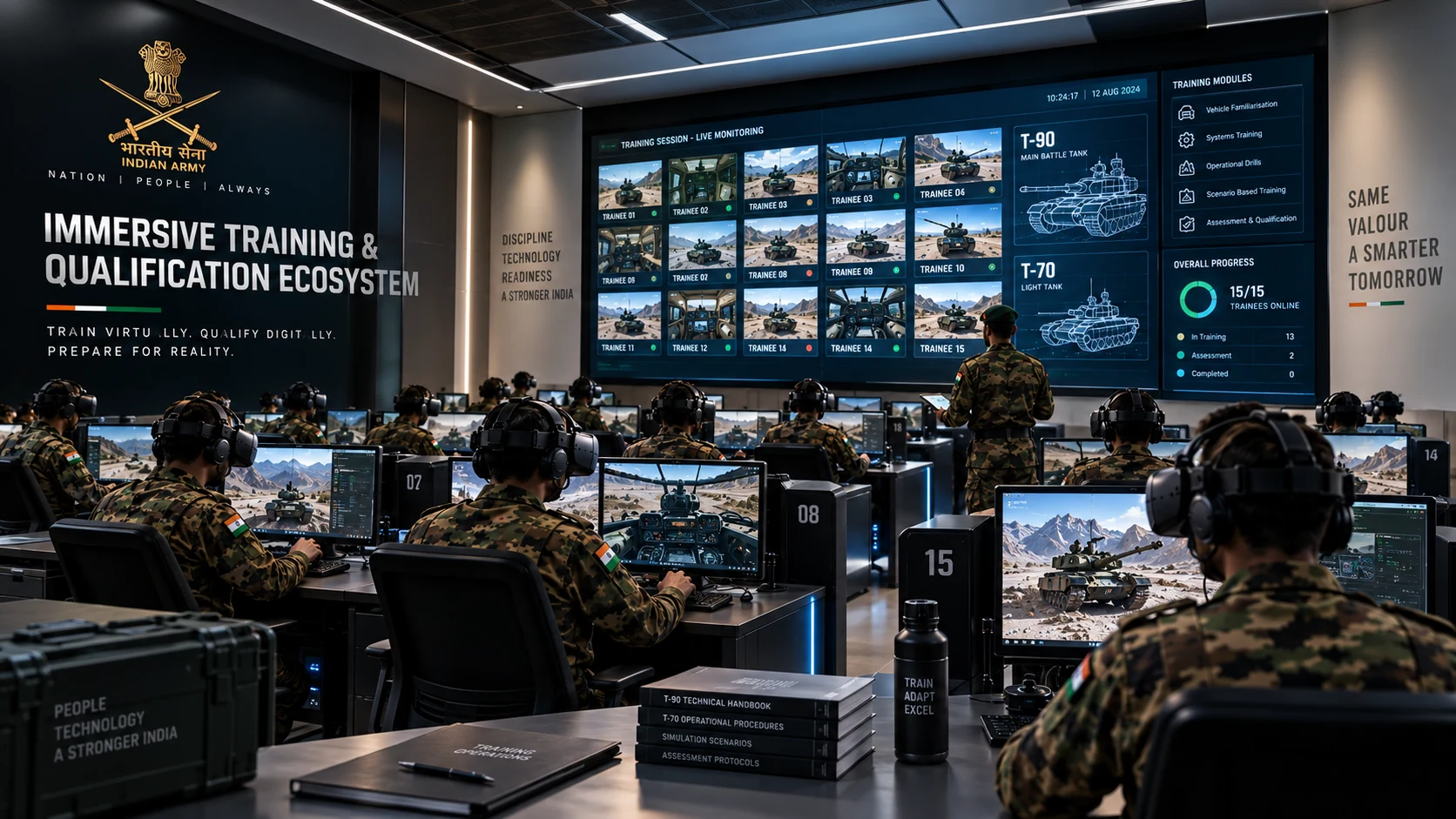
The trainer standing before the large central display, which shows a grid of every trainee's VR session alongside platform and session panels
Instructor command viewIndividual immersion → centralised instructor view

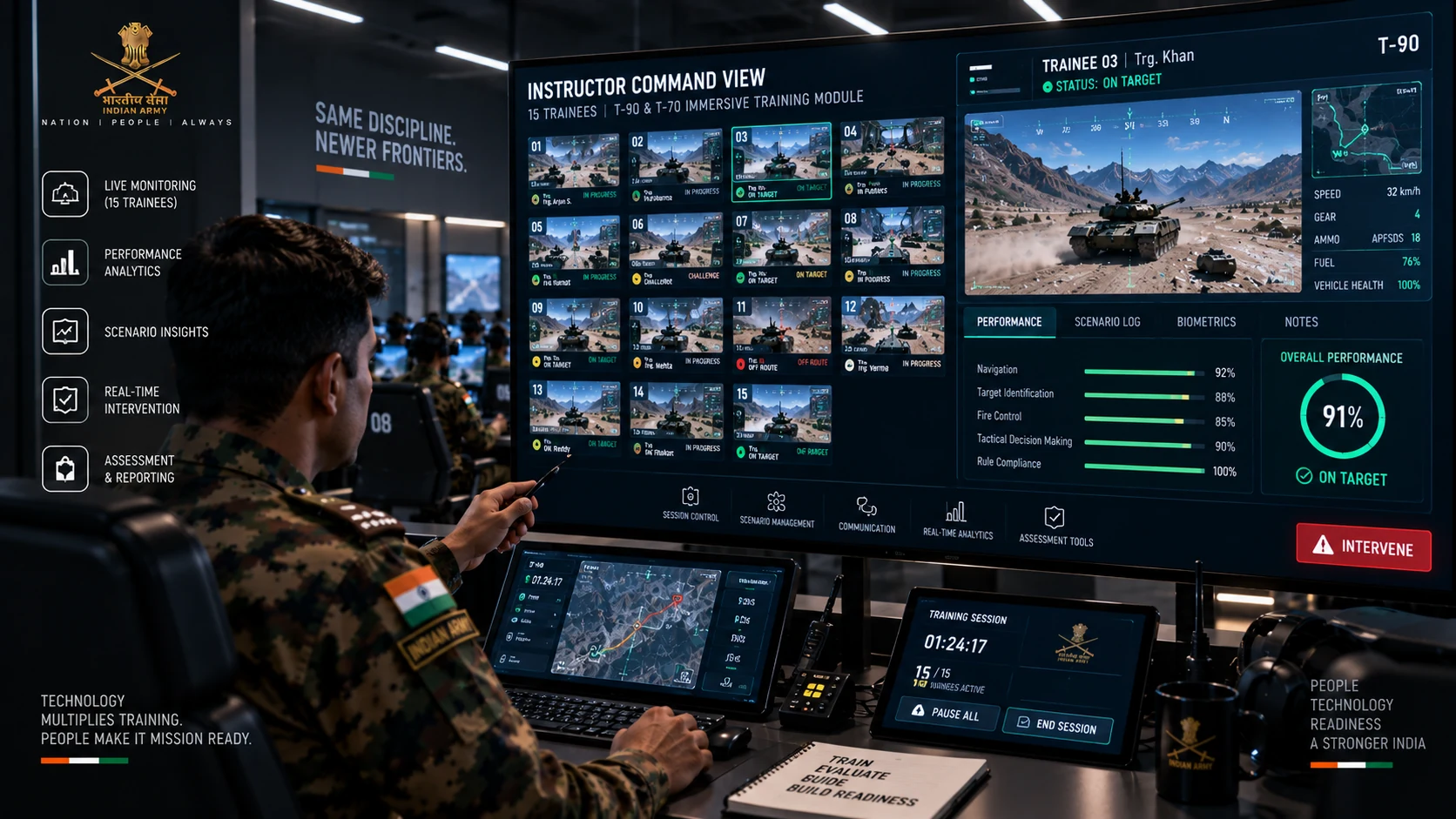
Trainees remained immersed in their individual VR sessions, while the trainer retained a centralised view of the training activity through the main display.

This allowed instruction, observation and assessment to remain connected to the immersive experience. The trainer could see what each trainee was doing during their session — not after it — and guide the room accordingly.

Designing for the instructor with the same care as the trainee was one of the most important decisions in the project. It is what turned fifteen private experiences into one training environment.

07 Monitoring & assessment

Observation stayed inside the loop.

Because trainee activity was visible on the central display, the trainer could observe individual sessions, follow progress through the training and bring attention to a specific trainee when needed.

The same visibility carried into assessment: what the trainer observed during practice became the basis for evaluating readiness to qualify.

The trainer at the monitoring console reviewing an individual trainee's session on the command view, with the station grid beside it
Instructor monitoringIndividual session brought forward on the central display
08 Platform

T-90

Learn inside the machine.

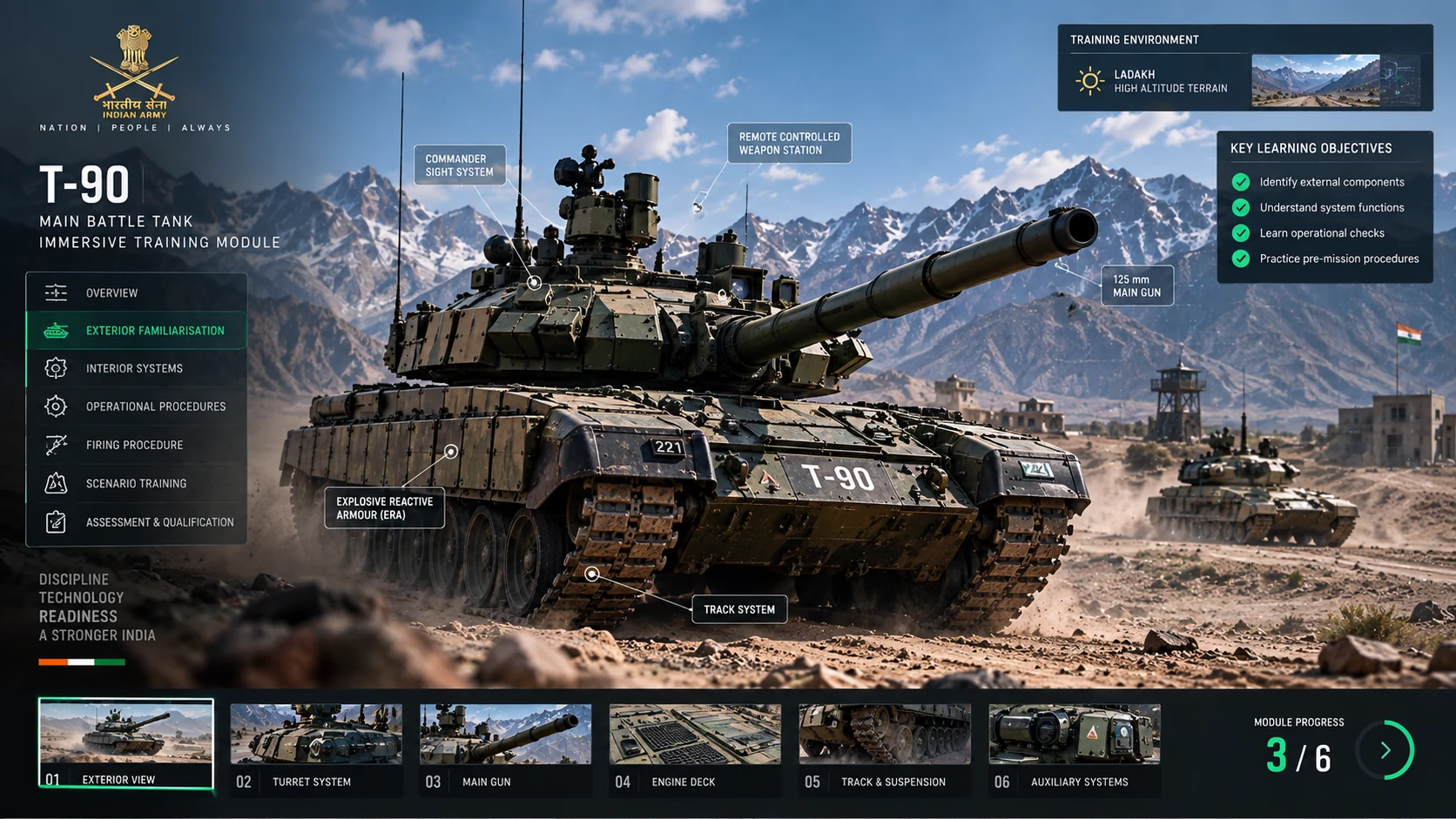
The T-90 was brought into the immersive training environment as part of the digital learning and practice experience.

The goal was to give trainees an immersive environment in which they could engage with the training experience before progressing to the next stage of training.

The T-90 in the immersive training environment, framed by the training module panel
T-90 immersive training
09 Platform

T-70

The same immersive training principle.

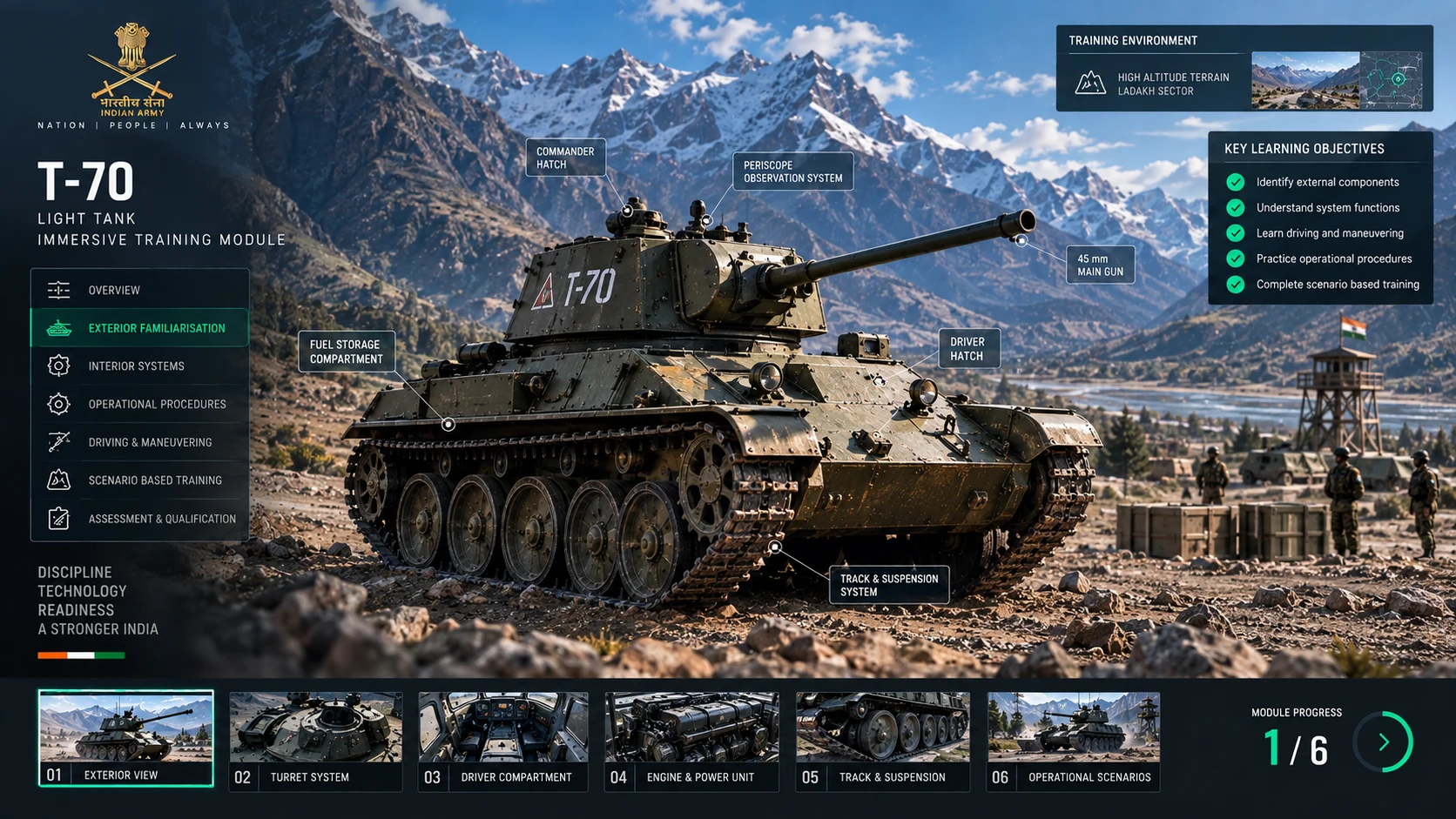
The T-70 was integrated into the same broader immersive training approach.

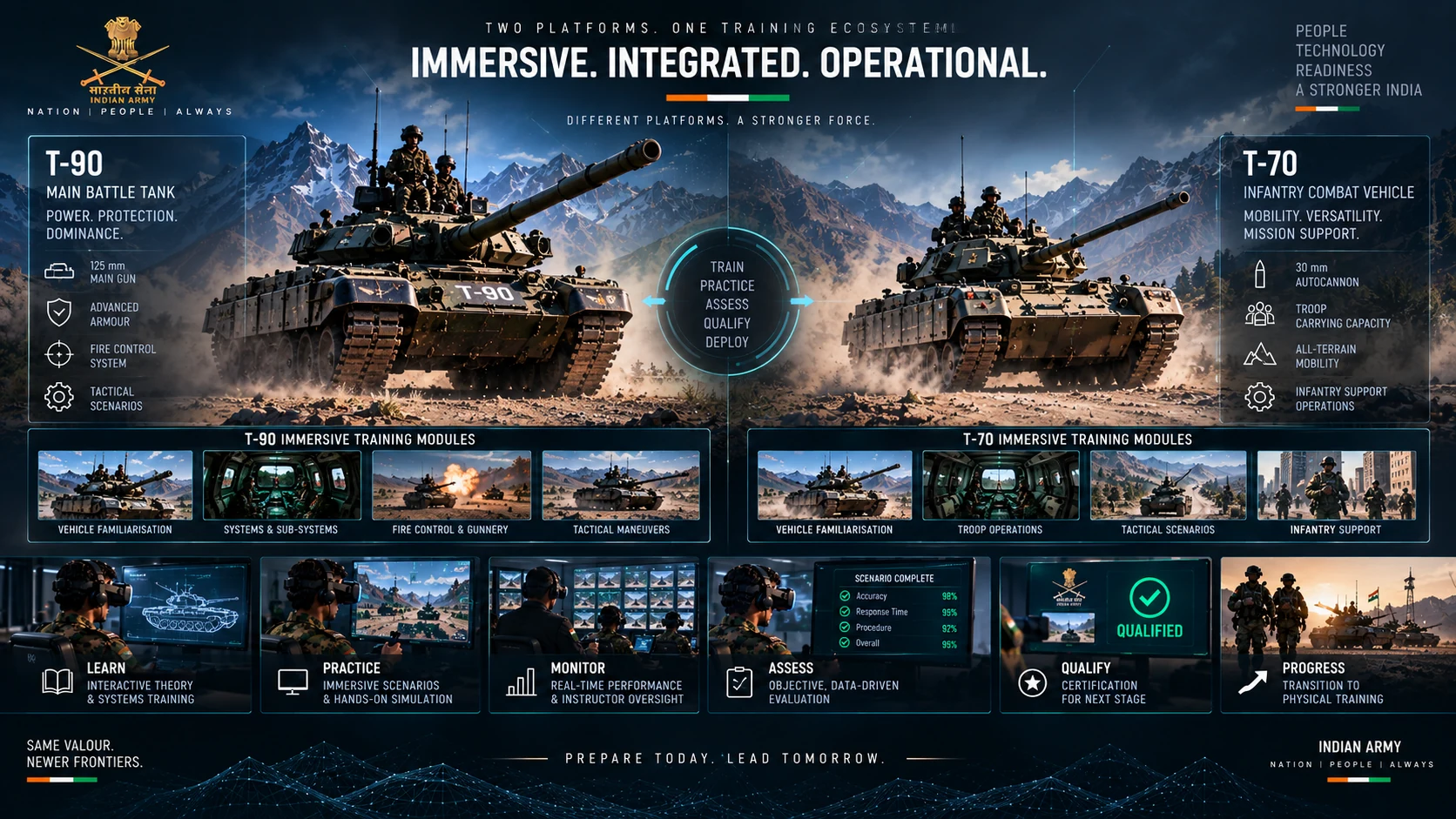
Rather than treating each platform as an isolated experience, the project established a consistent digital training framework across the two platforms.

The T-70 in the immersive training environment on open terrain, with the training module panel visible
T-70 immersive training
Two platforms, one training ecosystem: the T-90 and T-70 shown side by side above a shared strip of training modules
10 One framework

Two platforms. One training logic.

T-70 + T-90 unified framework

The strength of the experience was not only in recreating individual platforms digitally.

It was in creating a broader training logic that could move personnel through learning, practice and qualification within the immersive environment — the same logic, whichever platform a trainee was working on.

  1. —T-70 + T-90
  2. ↓Immersive training
  3. ↓Practice
  4. ↓Assessment
  5. ↓Qualification
  6. ↓Physical training
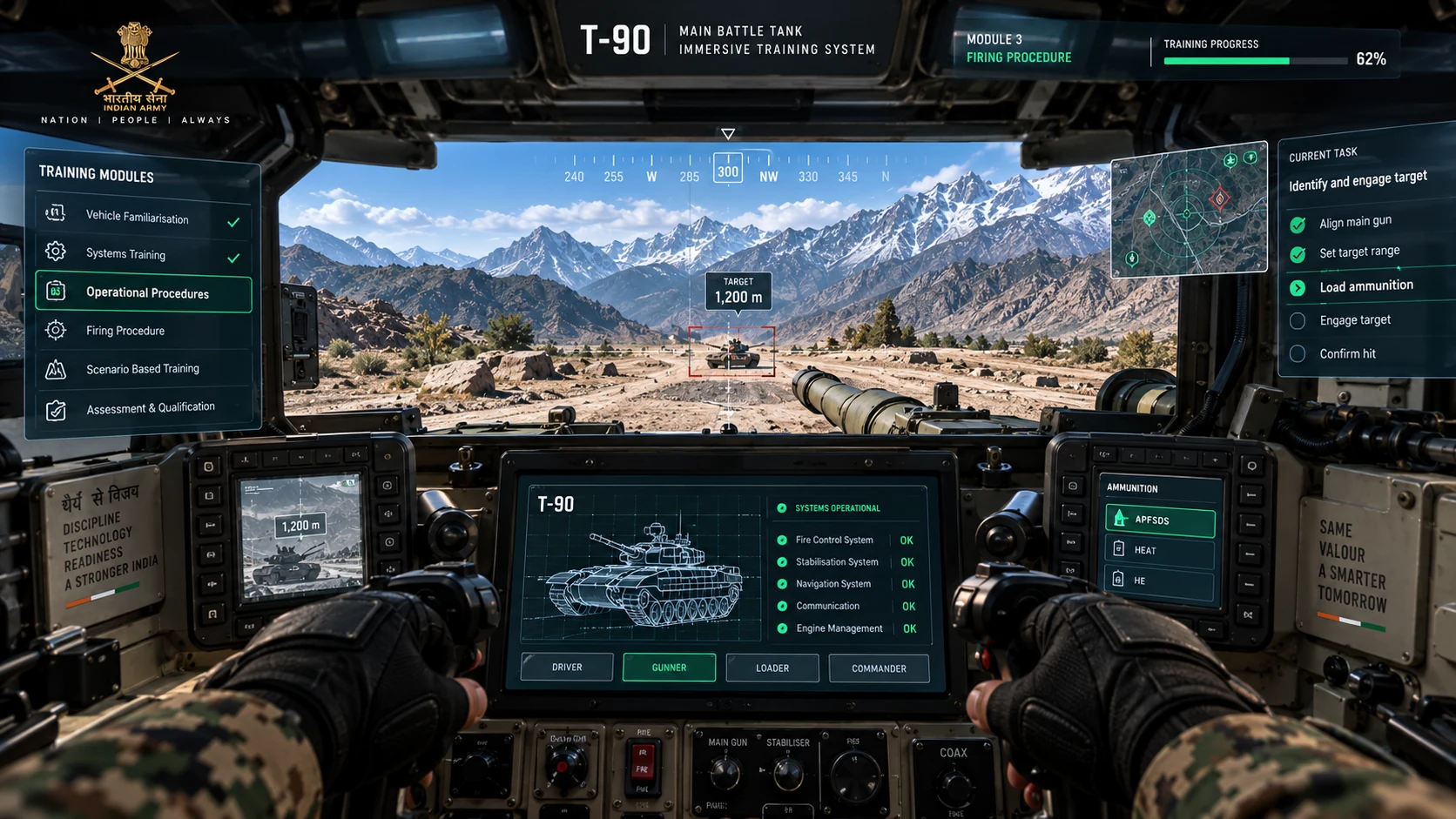
First-person view from inside the T-90 training environment: the crew position and viewport looking out over mountainous terrain
Inside the experience · trainee point of view
11 The trainee experience

Inside the experience.

For the trainee, the experience was direct and immersive.

VR placed the training environment around the individual, creating a space where learning and practice could happen through active participation rather than observation alone.

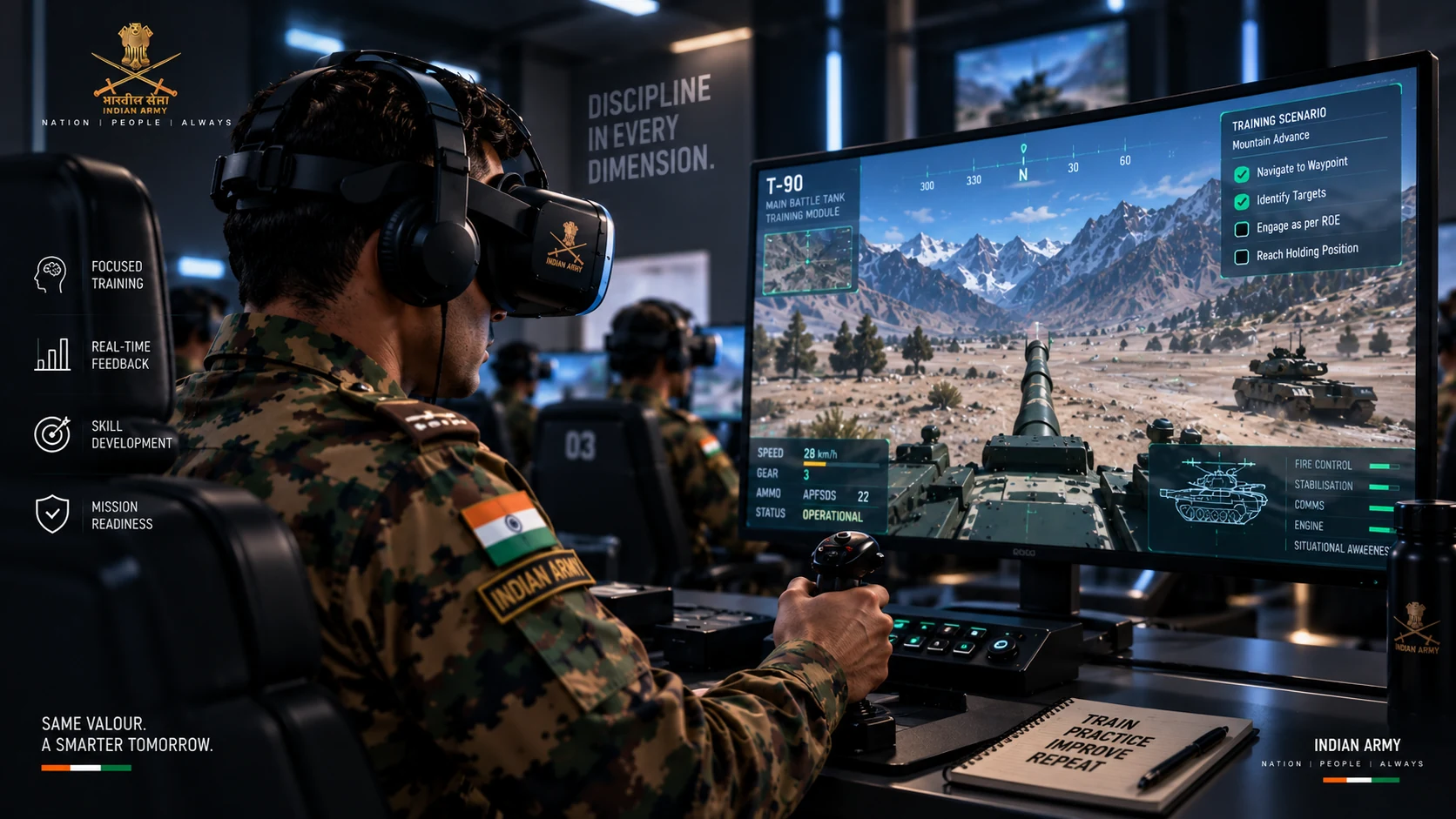
A trainee wearing a VR headset at a station, hands on the controls, with the training module on the monitor and the central display in the background
Individual trainee sessionOne station · one trainee · one immersive environment
12 One station, one trainee

Individual immersion. Shared visibility.

Each of the fifteen stations ran an individual VR session. What a trainee experienced was theirs alone — but what they were doing was visible to the trainer on the central display. That pairing of individual immersion and centralised visibility is the defining relationship of the ecosystem.

13 Qualification testing

Training became assessable.

The immersive environment also became the setting for qualification testing.

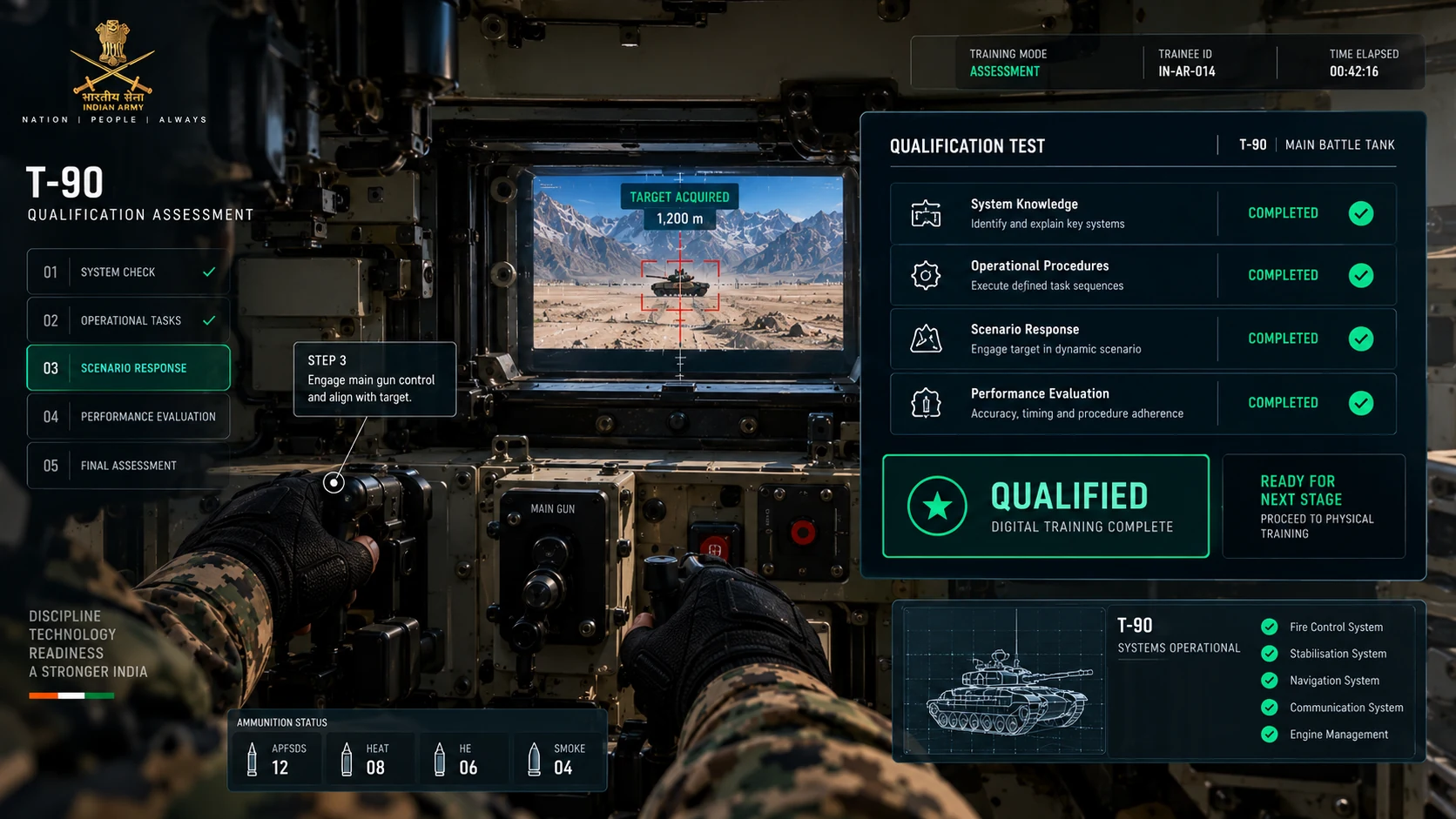
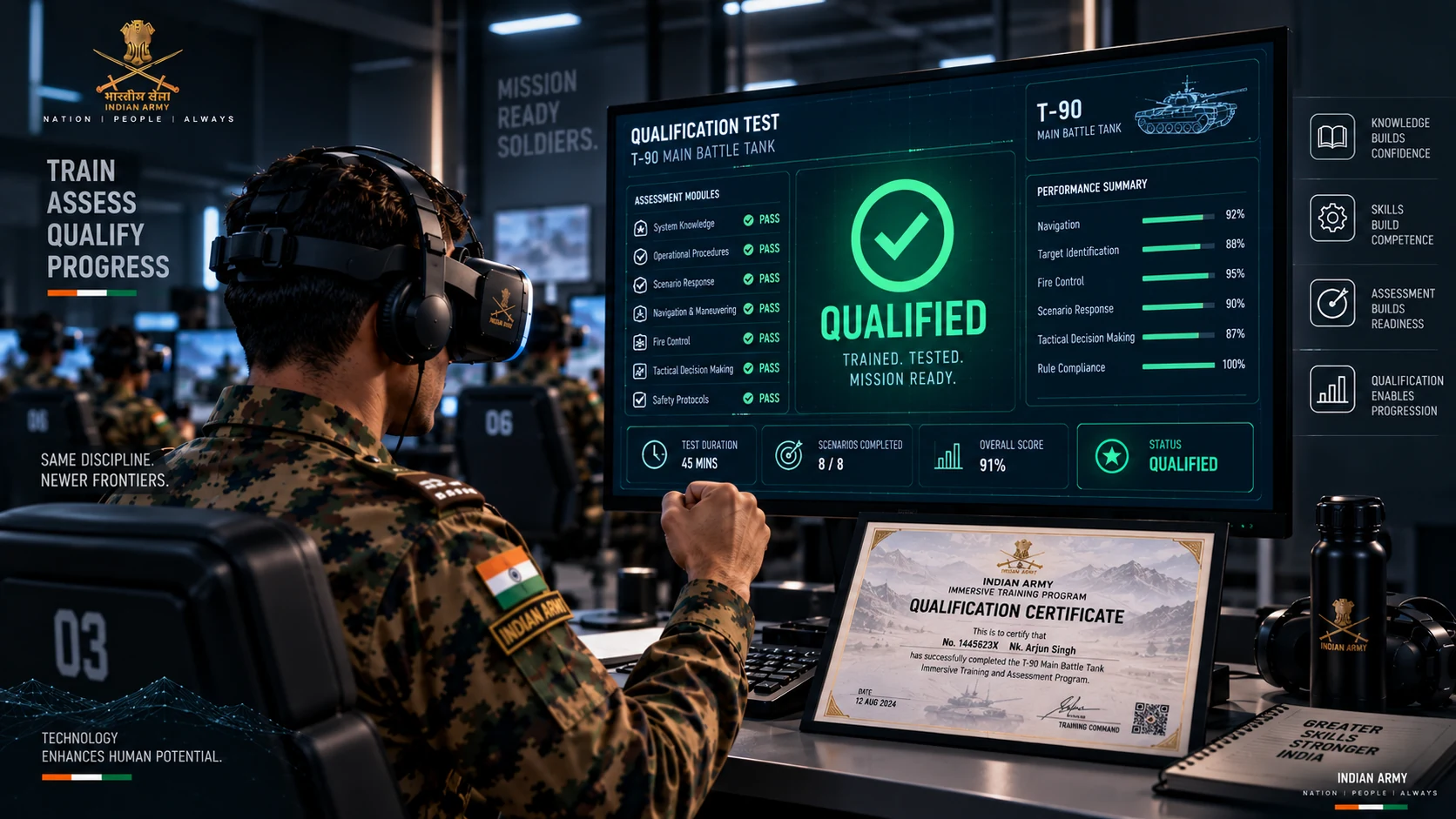
Qualification test view from inside the T-90 environment: assessment stages listed on the left, the crew position in the centre, and the qualification panel on the right
Qualification test · inside the immersive environment

Trainees were not simply experiencing the environment. They were expected to demonstrate their understanding and performance within it.

This introduced an important transition — from an environment in which you learn to one in which you are expected to show what you have learned.

Learning Practice Demonstration → Qualification
14 Assessment

What the trainer saw became the decision.

Assessment drew on the same central visibility the trainer used during practice: which trainees had worked through the training, how they had performed inside the environment, and who was ready to qualify.

That is what allowed qualification to be a considered stage rather than a formality.

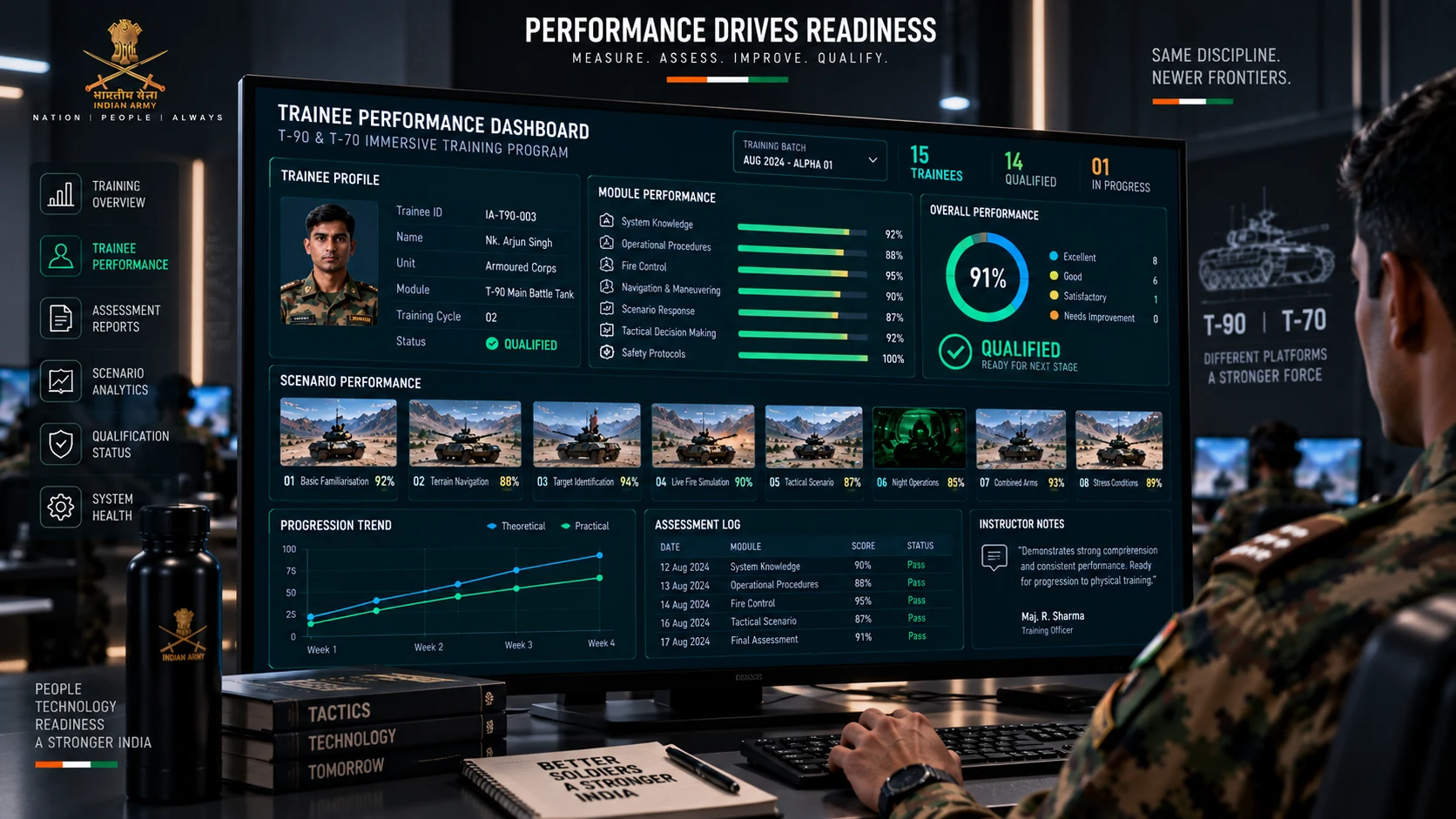
The trainer reviewing a trainee's assessment view on the central display
Assessment viewFigures shown are indicative only, not trainee records
A trainee at a station looks up at the screen confirming a qualified result, with the central display in the background
15 Qualification before progression

Qualified.

A defined stage between digital learning and physical training.

The qualification moment

Qualification created a defined stage between digital learning and physical training.

The immersive environment could therefore function not only as a training space, but also as a point at which trainees demonstrated their competency before progressing further.

16 From digital to physical

VR didn't replace the battlefield.

It prepared the trainee for the next stage.

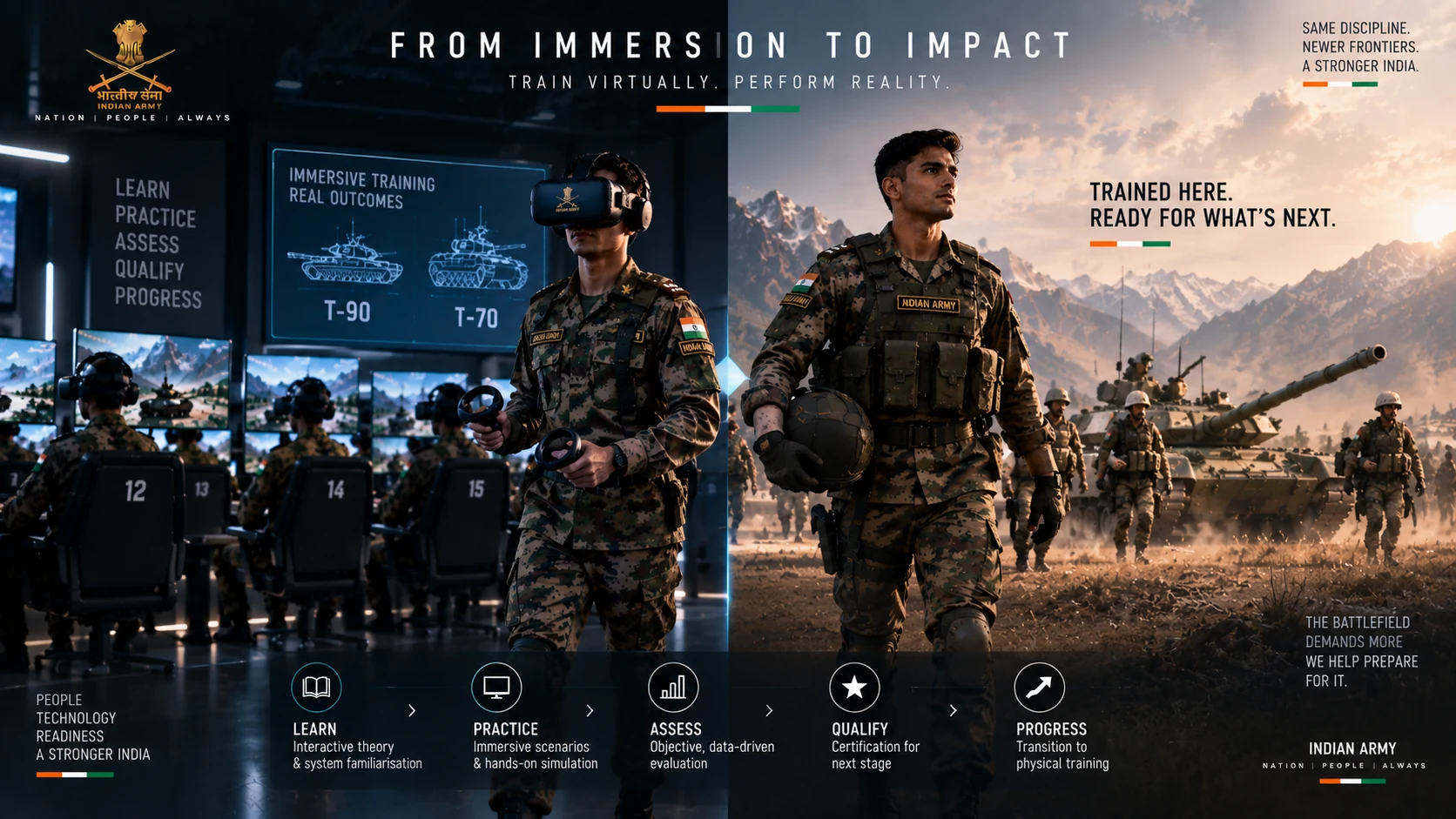
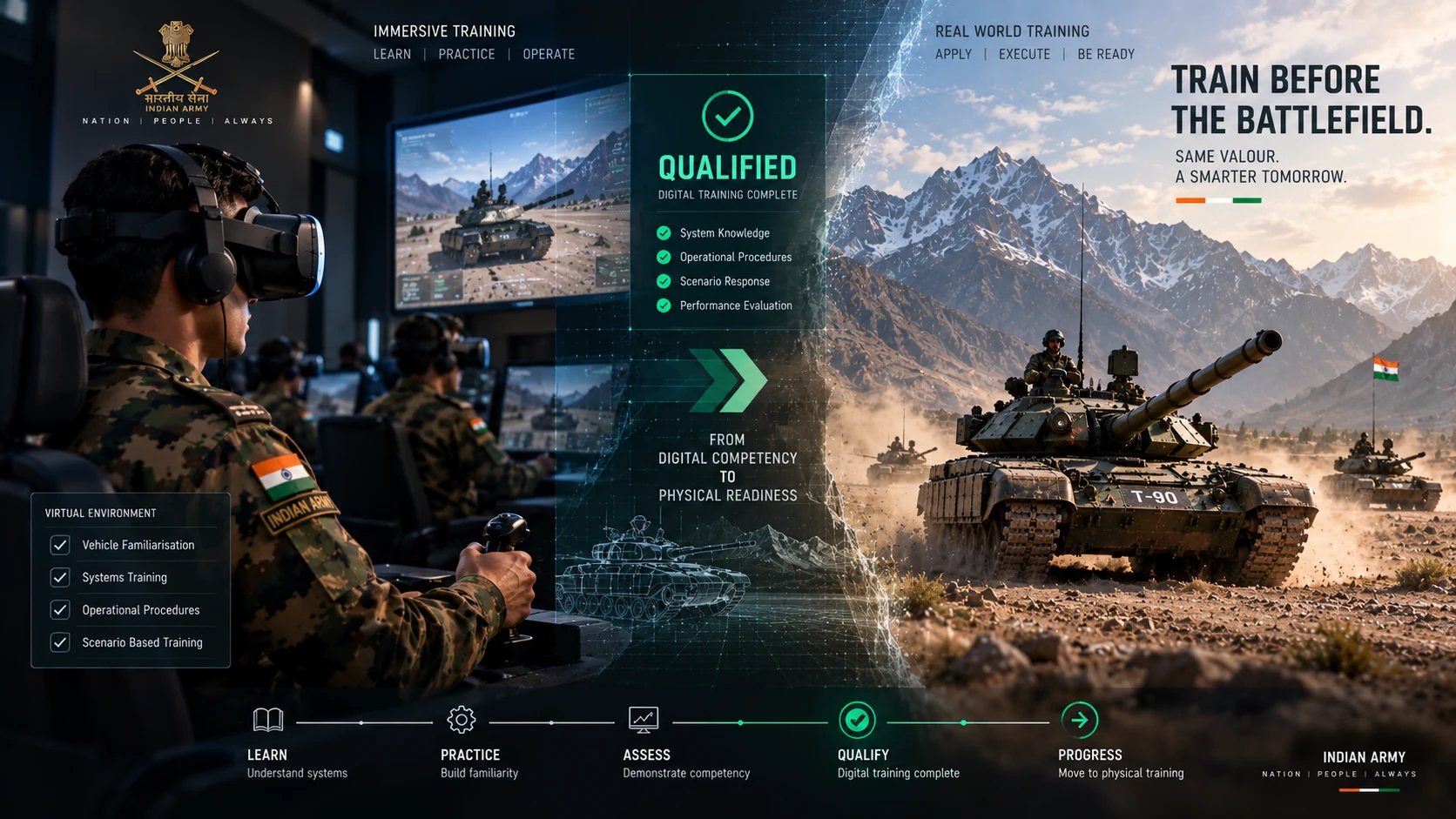
Split composition: a trainee in a VR headset with a qualified result on the left, transitioning to a tank crossing real terrain on the right
Digital → physicalImmersive training · qualification · physical training

The purpose of immersive training was not to replace physical training.

It created a digital preparation and qualification stage before personnel progressed toward physical, battlefield-based training.

Once trainees excelled in the digital training environment, they could progress to the next stage of physical training.

  1. 01DigitalImmersive training
  2. 02QualificationDemonstrated competency
  3. 03PhysicalPhysical / battlefield training
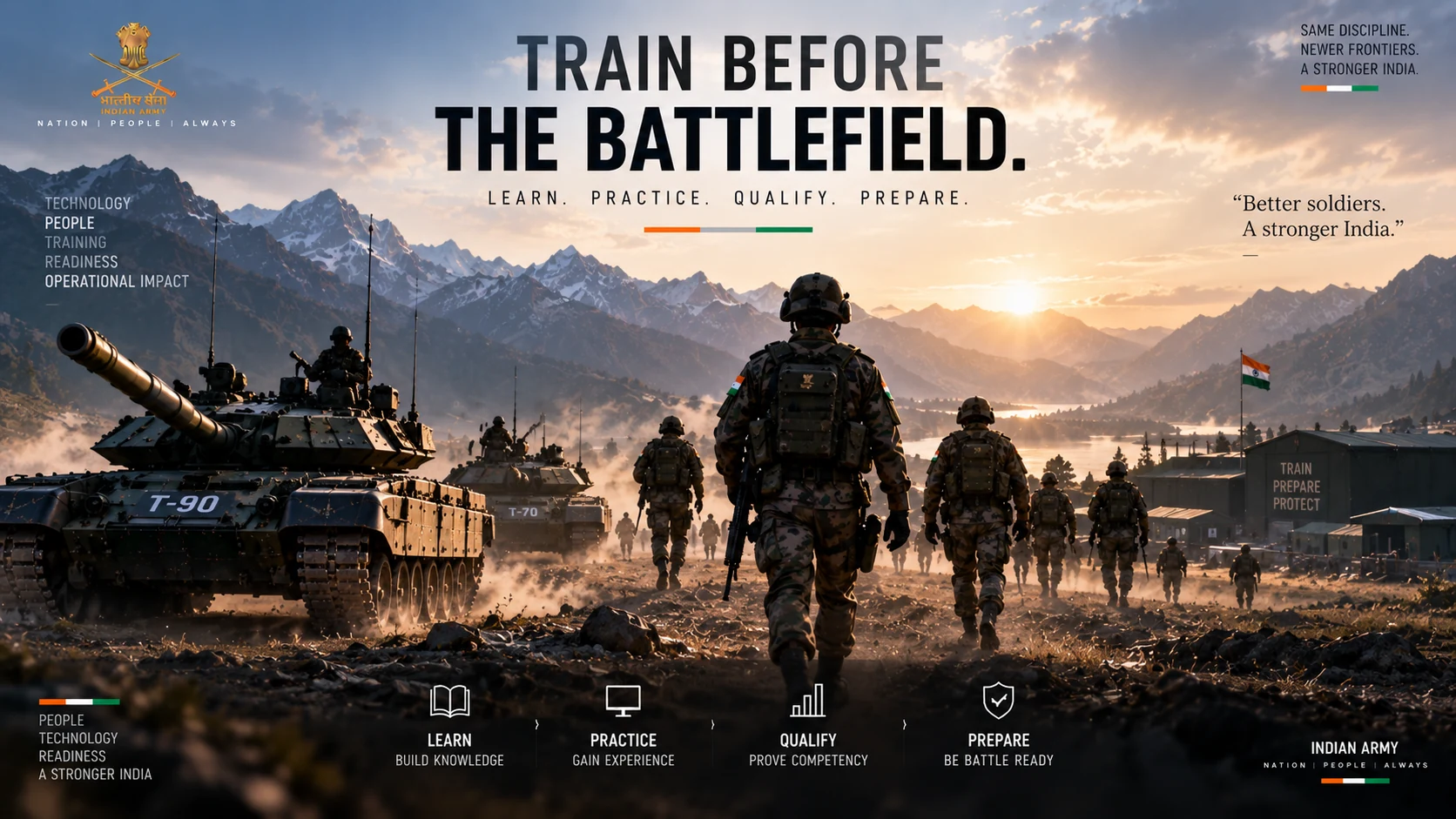
Tanks moving across open high-altitude terrain during physical training
17 Physical training

From immersion to physical training.

Physical / battlefield training

The digital environment was one stage of a larger training journey.

After demonstrating competency within the immersive environment, personnel could progress toward physical training. The experience therefore connected two worlds: immersive practice and physical training.

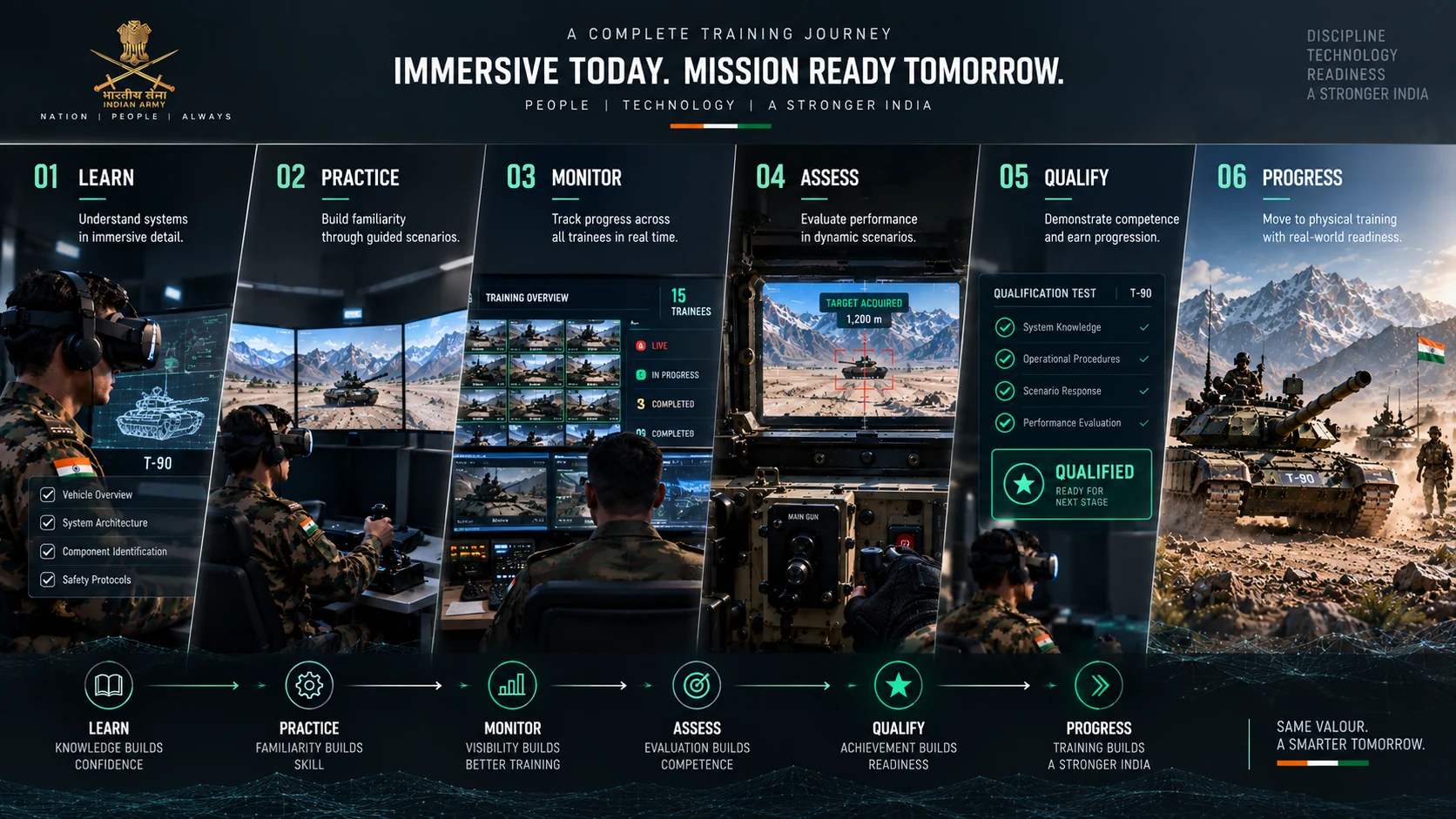
18 The complete journey

Learn. Practice. Monitor. Assess. Qualify. Progress.

  1. 01Learn

    Understand the training environment.

  2. 02Practice

    Build familiarity through immersive interaction.

  3. 03Monitor

    Trainer maintains centralised visibility.

  4. 04Assess

    Performance is observed within the immersive environment.

  5. 05Qualify

    Trainees demonstrate competency.

  6. 06Progress

    Successful trainees can move toward physical training.

Overview of the complete training journey — Learn, Practice, Monitor, Assess, Qualify, Progress — above a trainee at a VR station
The complete training journey
19 System architecture

A training ecosystem, not a single screen.

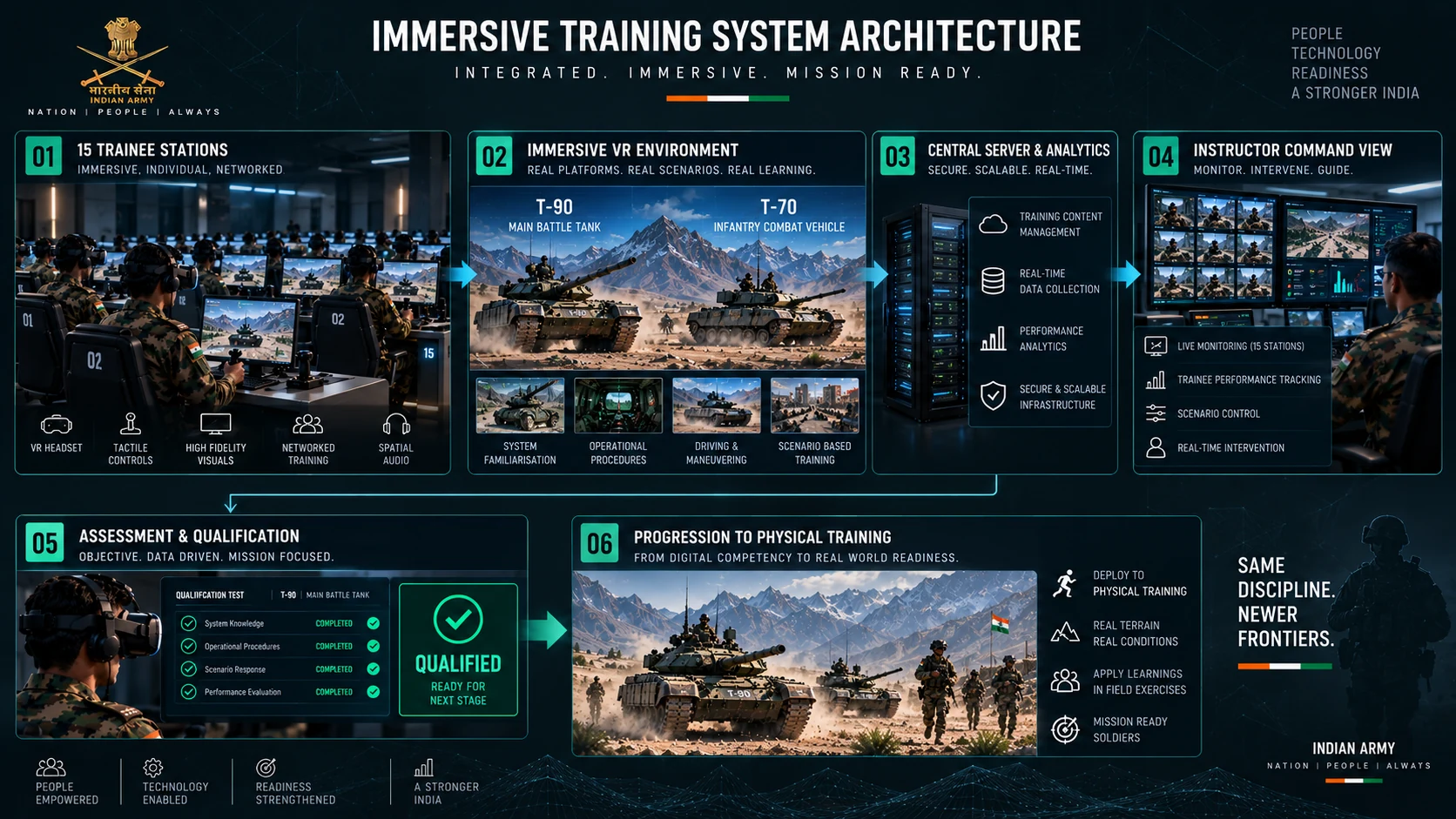
At the system level, every part of the facility had a place in one chain — from the fifteen stations to the point at which a trainee progressed to physical training.

  1. 0115 trainee stations
  2. 02VR training environmentsT-70 and T-90
  3. 03Centralised trainer viewHigh-end central display
  4. 04Immersive assessment
  5. 05Qualification
  6. 06Physical training
System architecture overview connecting the trainee stations, the immersive VR environment, the instructor view, assessment and qualification, and progression to physical training
System architectureSystem-level view
20 Content development

The experience was built around the training.

My role extended beyond the visual layer.

I was involved in shaping the experience and content that trainees encountered inside the immersive environment, translating requirements into a structured training journey and coordinating its development through iteration and stakeholder feedback.
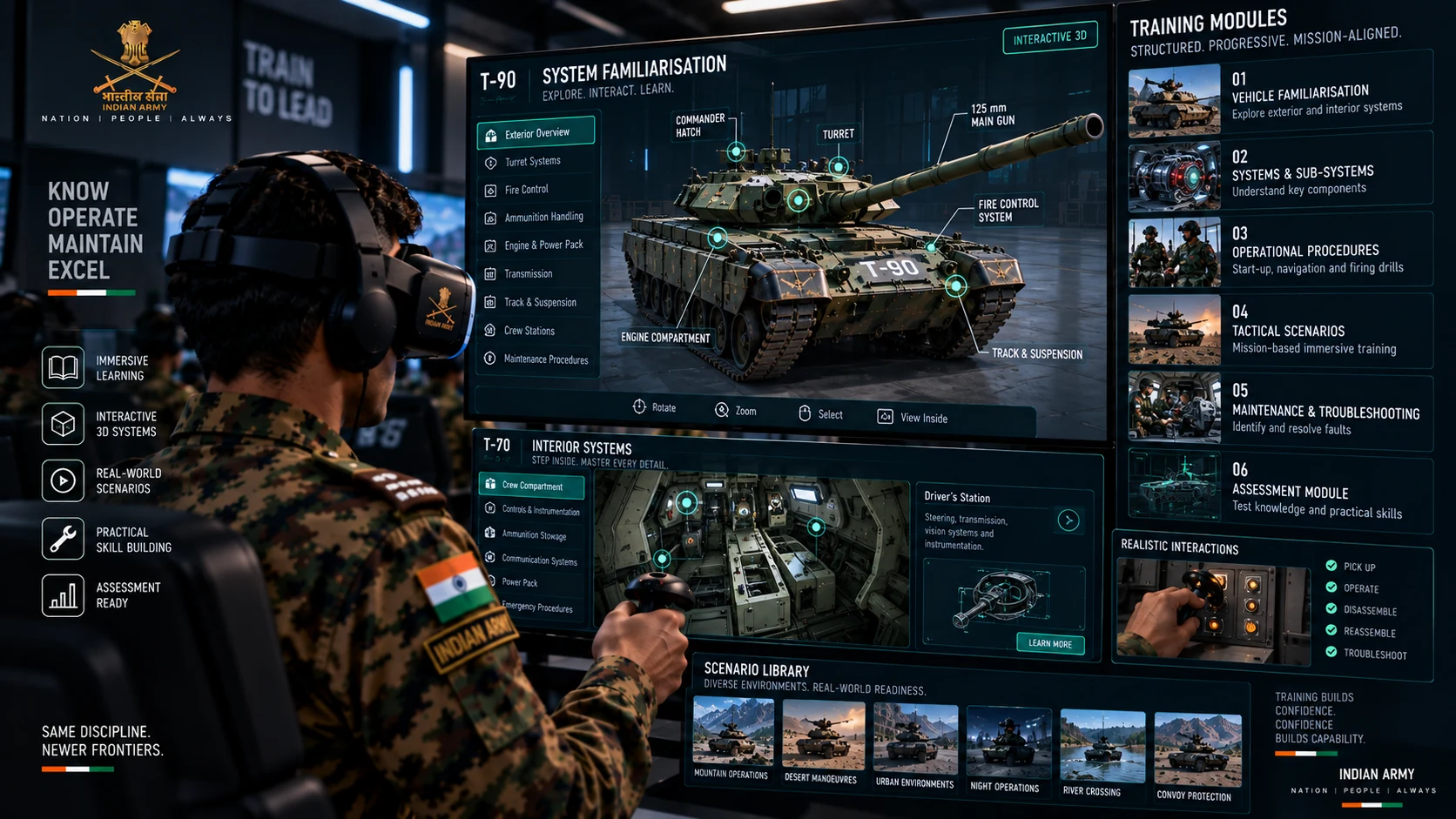
Close view of the training content structure on a station monitor beside the vehicle model
Training content detail
21 Stakeholder management

Working at the speed of the stakeholder.

Three cadences ran through the whole project. Each one was mine to prepare for, present to and act on.

  1. Daily

    MajorDirect collaboration

    Working through requirements, reviewing progress, discussing feedback, aligning the experience, resolving issues and driving iterations.

    RequirementsFeedbackIterationProgress
  2. Weekly

    ColonelReview

    Progress reviews, direction, feedback, alignment and presentation of the evolving work.

    DirectionAlignmentFeedback
  3. Senior review

    BrigadierApproval

    Taking the work through senior-level review for Brigadier-level approval.

    Senior-level reviewApproval

Direct collaboration → review → alignment → senior approval.

Working directly with Army stakeholders throughout the project meant continuously translating requirements into experience decisions, taking feedback back to the team, iterating the work and presenting the evolving solution for review.

These were project relationships — collaboration, review and approval of the work. They do not describe a military position or command authority.

22 My role

Led the experience, end to end.

Strategy, direction, content, stakeholders, team and execution — held together across the lifecycle of the project rather than handed off after the concept.

  1. 01

    Experience strategy

    Defined how the immersive experience could support the broader training journey.

  2. 02

    Creative direction

    Shaped the overall experience, storytelling and creative approach.

  3. 03

    Immersive experience

    Directed how trainees would encounter and move through the digital environment.

  4. 04

    Content development

    Created and shaped the content required for the immersive training experience.

  5. 05

    Stakeholder management

    Worked directly with the Major, the Colonel and the Brigadier-level approval process.

  6. 06

    Team leadership

    Coordinated the team responsible for developing and executing the experience.

  7. 07

    Client coordination

    Managed feedback, iterations, reviews and alignment.

  8. 08

    Execution

    Stayed involved across the lifecycle rather than handing off the work after strategy or concept development.

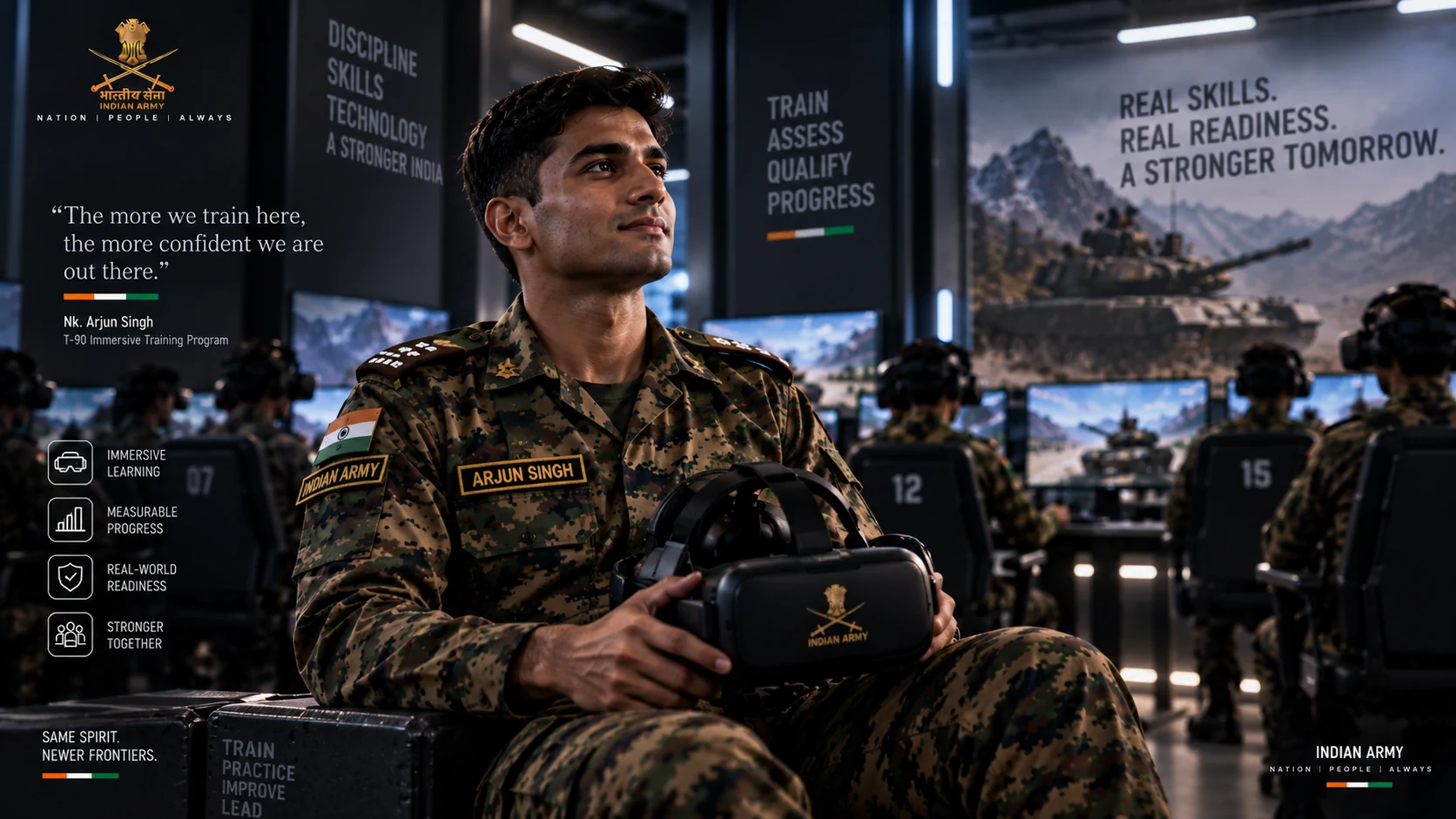
A trainee seated in the training room holding a VR headset, looking up, with the training wall behind
The trainee
23 Human experience

Behind every system is a trainee.

The technology was only valuable if it made the training experience understandable, immersive and assessable for the person using it.

The work therefore had to operate at two levels simultaneously: the individual trainee experience, and the instructor's ability to understand and guide that experience.

From immersion to impact: trainees in the VR room on the left give way to personnel and a tank on real terrain on the right
24 From immersion to impact

Trained here. Ready for the next stage.

From immersion to impact
25 Impact

What the system created.

Six qualities the training environment brought to Army personnel and their instructors.

  1. 01

    Immersive

    Training moved beyond passive observation into active participation.

  2. 02

    Repeatable

    The digital environment provided a space for repeated practice.

  3. 03

    Connected

    Individual trainee experiences remained visible to the instructor.

  4. 04

    Assessable

    Qualification testing became part of the immersive environment.

  5. 05

    Progressive

    Training could move from digital practice toward physical training.

  6. 06

    Systemic

    The project connected people, content, technology, instruction and qualification into one training ecosystem.

26 The role of immersion

Train before the battlefield.

The project created a digital training and qualification layer between learning and physical training — allowing personnel to learn, practise and demonstrate competency within an immersive environment before progressing further.

27 Project information

At a glance.

Client
Indian Army
Project
Immersive Training & Qualification Ecosystem
Platforms
T-70 + T-90
Format
Immersive VR training
Facility
15 high-end training stations in a dedicated training room
Instructor view
Centralised high-end display
Qualification
Testing within the immersive environment
Progression
Digital training → qualification → physical training
Stakeholders
Major (daily) · Colonel (weekly) · Brigadier-level approval
Role
Experience strategy / creative direction / immersive experience / content development / stakeholder management / team coordination / execution
28 Closing

Learn. Practice. Qualify. Prepare.

The Indian Army project demonstrated how immersive technology can become part of a larger training ecosystem — connecting individual learning, instructor visibility, qualification and progression toward physical training.

The result was not simply a VR experience. It was a structured bridge between digital immersion and the next stage of training.

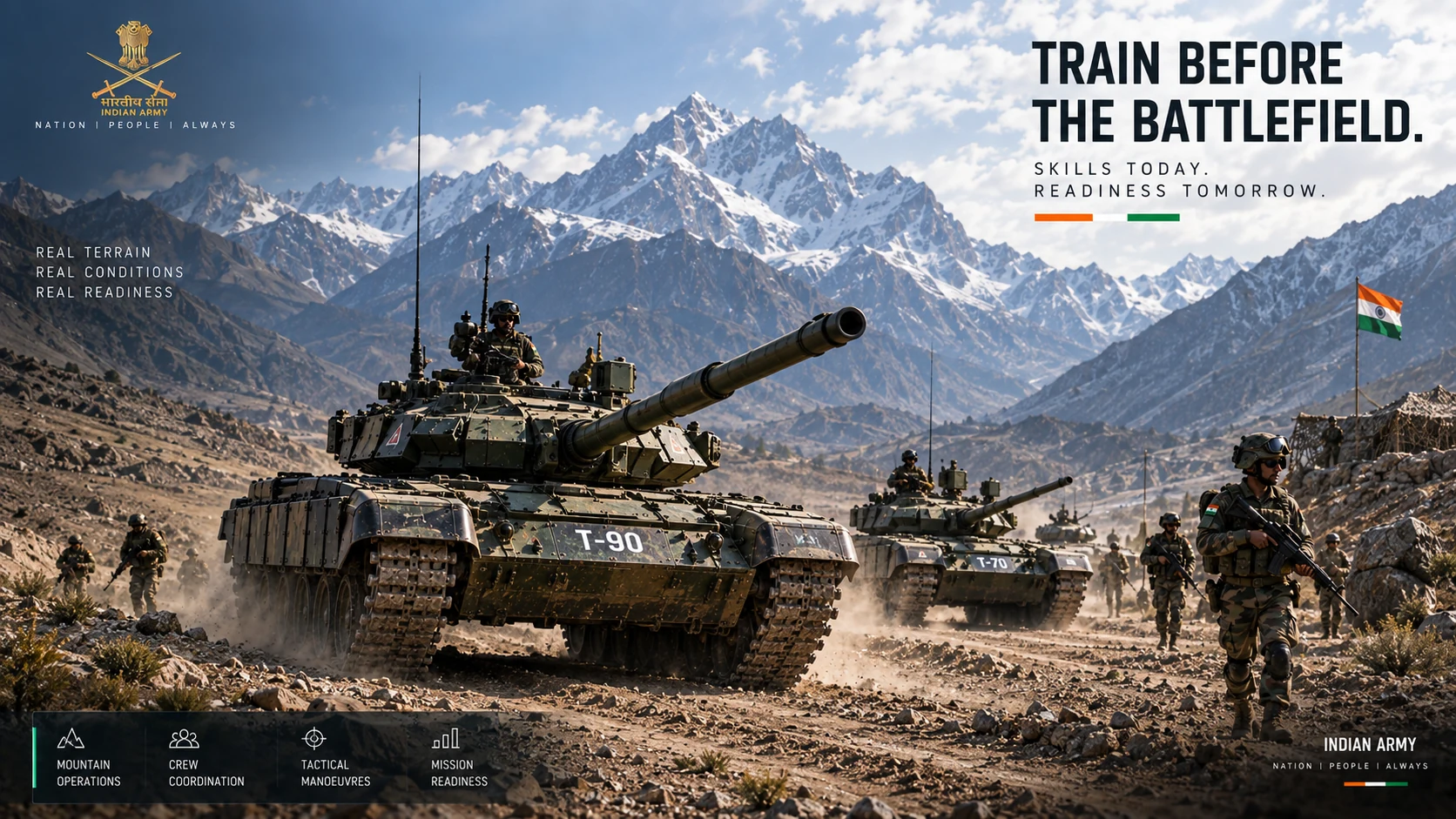
Closing frame: a tank and personnel on high-altitude terrain at dusk under the words 'Train before the battlefield'
Final statement

Train before the battlefield.

LearnPracticeQualifyPrepare
Train before the battlefield.
Indian Army · Immersive Training & Qualification Ecosystem Experience strategy · creative direction · immersive experience · content · stakeholders · team · execution All case studies