Insight 01  /  Human-Centred TechnologyAbhijeet Varghese · 13 min read

Technology Should Feel Human

The best technology does not make people feel like they are using technology. It makes them feel capable, understood and connected.

Human-Centred Design · Experience Design · Creative Technology · AI · XR

Capability without complexity.

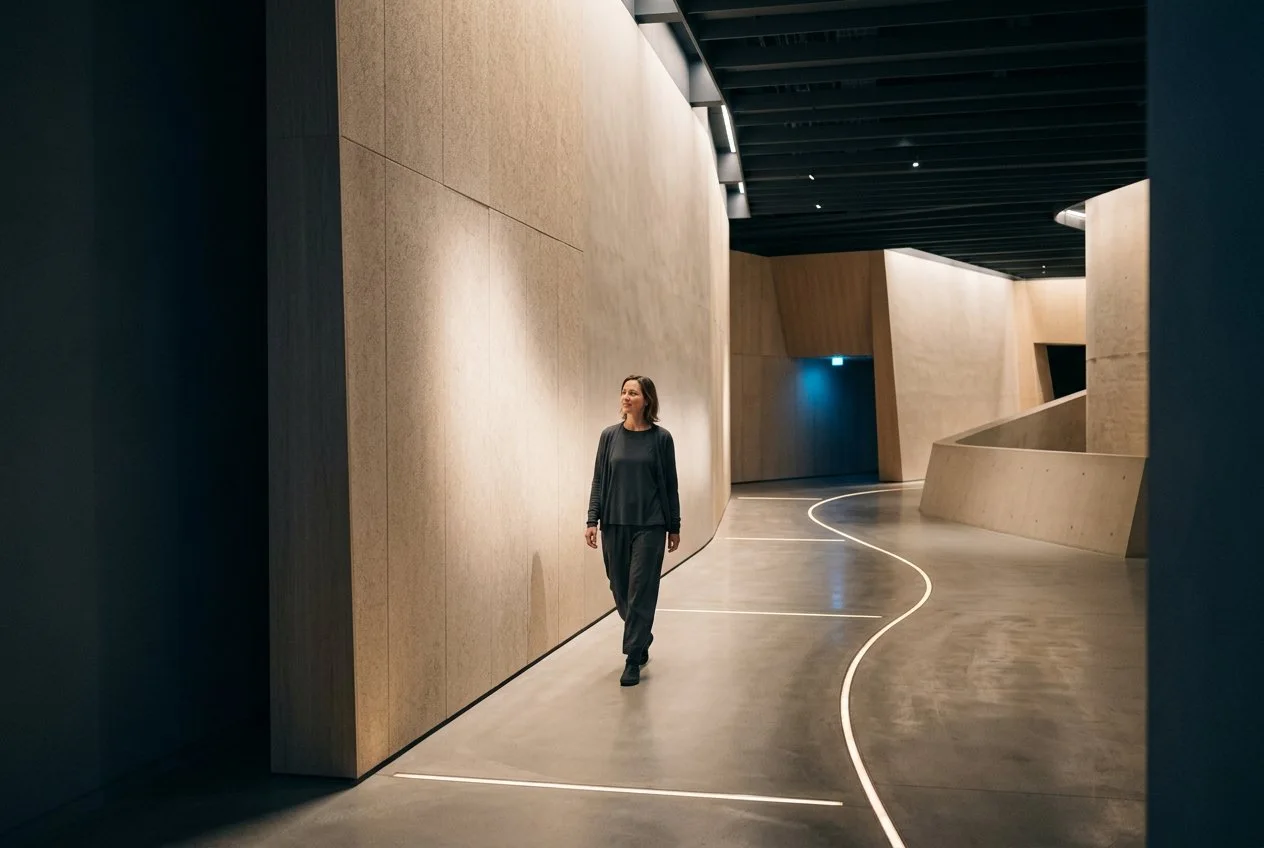
Human-centred technology integrated naturally into a physical and digital experience.

Technology keeps getting smarter. The experience does not always get better.

People do not experience technology through specifications. They experience it through understanding, emotion, confidence, effort and outcomes.

Understanding · Confidence · Connection

Artificial intelligence can generate, analyse and interpret information at extraordinary speed. Virtual reality can place people inside simulated environments. Spatial computing can turn the environment around us into an interface.

Sophistication does not automatically create a better experience.

Technology is getting remarkably sophisticated. But sophistication can also create the opposite of a better experience: more features, more interfaces, more choices, more notifications and more complexity.

That leads to a more important question than “How advanced is the technology?”: How human does the experience feel?

Technology is useful only when people can use it.

An AI product can be intelligent but confusing. A VR experience can be immersive but uncomfortable. An interactive installation can be visually impressive but provide no meaningful reason to interact. A digital product can have hundreds of features while hiding the one feature someone needs.

The technology works. The experience does not. The designer’s responsibility is not to expose technological capability. It is to translate capability into human value.

“Look what you can now do because this technology exists.”
The human-centred alternative

Start with the person, not the technology.

With AI, it is tempting to ask what it can generate. With VR, what it can simulate. With AR, what it can overlay. These are useful questions, but they should come later.

The first questions are: Who is experiencing this? What are they trying to achieve? What do they struggle with? What should become easier, possible, understandable or meaningful?

01

Human First, Technology Second

Technology should be selected because it improves the human outcome — not because it is new.

Start with the human outcome. Let technology become the enabler.
The invisible layer

Good technology disappears.

When a digital service simply works, people do not think about databases, APIs, servers or code. They accomplish what they came to do.

The complexity still exists. It has simply been absorbed by the system. This is the power of good experience design.

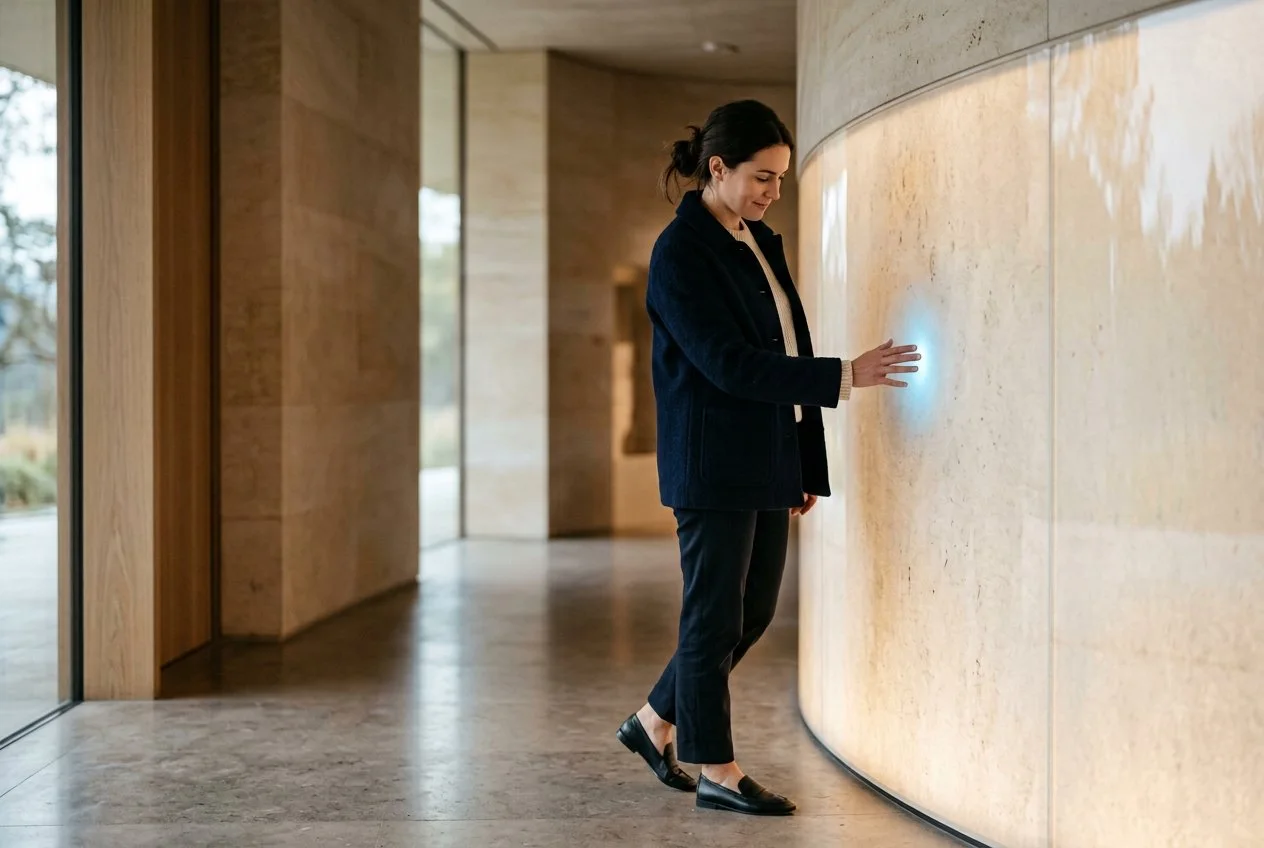
Human interacting naturally with an advanced physical-digital experience.
The technology is sophisticated. The experience feels natural.

When technology becomes visible for the wrong reason.

Technology becomes noticeable when navigation is confusing, a gesture is not recognised, an interaction behaves unexpectedly, an AI response is unclear or an installation requires instructions longer than the experience itself.

At that point, the person stops experiencing the intended outcome. They start experiencing the technology. The interface has become the problem.

The best interaction can feel obvious.

You do not need a manual or someone standing beside you explaining it. You see an invitation, interact, the system responds, you understand what happened, and you continue. Enormous technical complexity can sit beneath that sequence without becoming the user’s burden.

Immersion increases possibility. It also increases responsibility.

Immersive environments remove familiar boundaries. People can look around, move, explore, interact, listen, reach and choose. The experience can respond to them. That creates extraordinary possibilities — and questions about attention, interaction, recovery, information load and behaviour.

A person can feel completely present inside a virtual environment and still have a poor experience. The better question is: What does their sense of presence allow them to do?

If immersion helps someone understand a complex system, safely practise a dangerous situation or access a perspective they could not otherwise experience, it has purpose. The technology becomes valuable because it changes human possibility.

Technology-first

  • More features
  • Unclear interaction
  • Uncertainty
  • Cognitive friction

Human-centred

  • Context
  • Clear hierarchy
  • Intuitive interaction
  • Feedback and confidence
02

Cognitive Load in Experience Design

Good experience design does not eliminate complexity. It prevents unnecessary complexity from reaching the person.

AI makes this principle even more important.

AI can generate responses, adapt, interpret, recommend, predict and personalise. That can make experiences feel natural, but it can also introduce uncertainty. If a system behaves differently each time, people need enough understanding to know what to expect.

Human-centred AI is not about making systems pretend to be human. It is about intent, context, control, transparency, feedback, error recovery, accessibility, trust and responsibility.

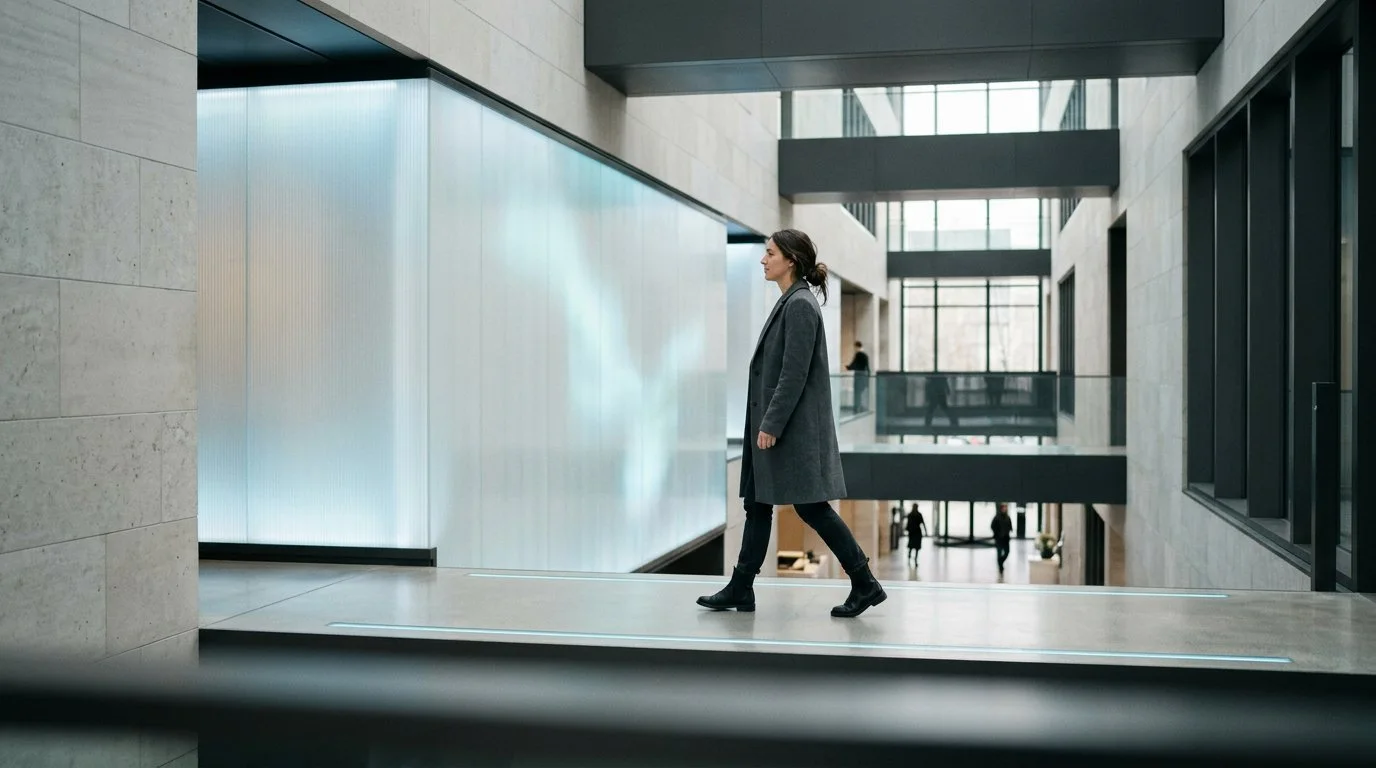
Person experiencing an immersive environment designed around human interaction and understanding.
Immersion succeeds when people remain oriented, capable and in control.

Technology is not the outcome

Technology is an amplifier.

Technology can extend capability, accelerate exploration, expand perception, remove repetitive work and connect people with information.

Experience design determines what gets amplified — and why.

03

Technology as an Amplifier

Technology amplifies capability, information and connection. Experience design gives those possibilities direction.

One experience, not a collection of technology.

The Orange Business Executive Briefing Center brought together physical space, brand experience, digital content, interactive media, video, VR and environmental technology. Registration, synchronisation, personalised greetings, automation and coordination happened behind the scenes.

From the outside, those can appear to be separate technology features. For the visitor, they needed to feel like one coherent, responsive journey. The visitor should never need to understand the technology stack.

Design for the imperfect moment.

People do not experience products under laboratory conditions. They use them while distracted, tired, in a hurry, unfamiliar with the environment, helping someone else or under pressure.

A human-centred experience accounts for people who forget, make mistakes, change their minds, get interrupted and approach problems differently. Design not only for the ideal interaction, but for mistakes, uncertainty, recovery and variation.

The Human Technology Test.

Before introducing emerging technology, evaluate the human problem — not simply the technical possibility.

Framework 04

The Human Technology Test.

Choose each step to test whether a new technology should earn a place in the experience.

01

Does it solve a real human problem? If no meaningful problem exists, reconsider the technology.

Human capability

The measure is what people can accomplish.

Technology can support learning, exploration, communication, simulation, decision-making, creation, accessibility and personalisation.

The outcome is what matters. And sometimes a simple sentence solves the problem better than every emerging technology available.

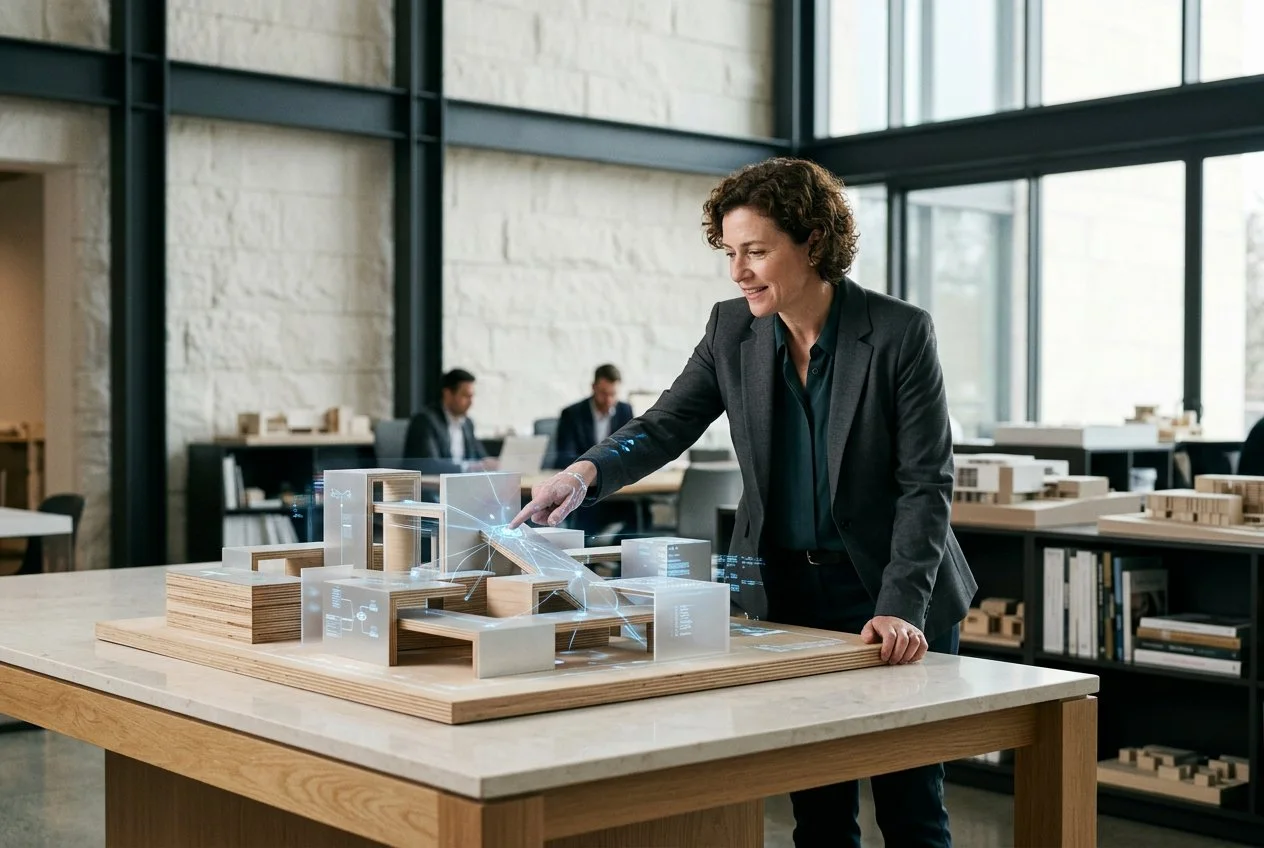
Person using emerging technology to accomplish a meaningful task within a human-centred experience.
The measure of technology is what it enables people to understand and accomplish.

Final thought

Technology should expand human capability without asking people to carry more complexity.

Interfaces may move from pixels to behaviour, screens to environments and buttons to intentions. Design does not disappear — it moves deeper into the relationship between technology and people.

The Insight Series

One philosophy. Four perspectives.

Technology becomes valuable when human intent, creative judgment, memorable experience and enterprise systems are designed as one connected whole.