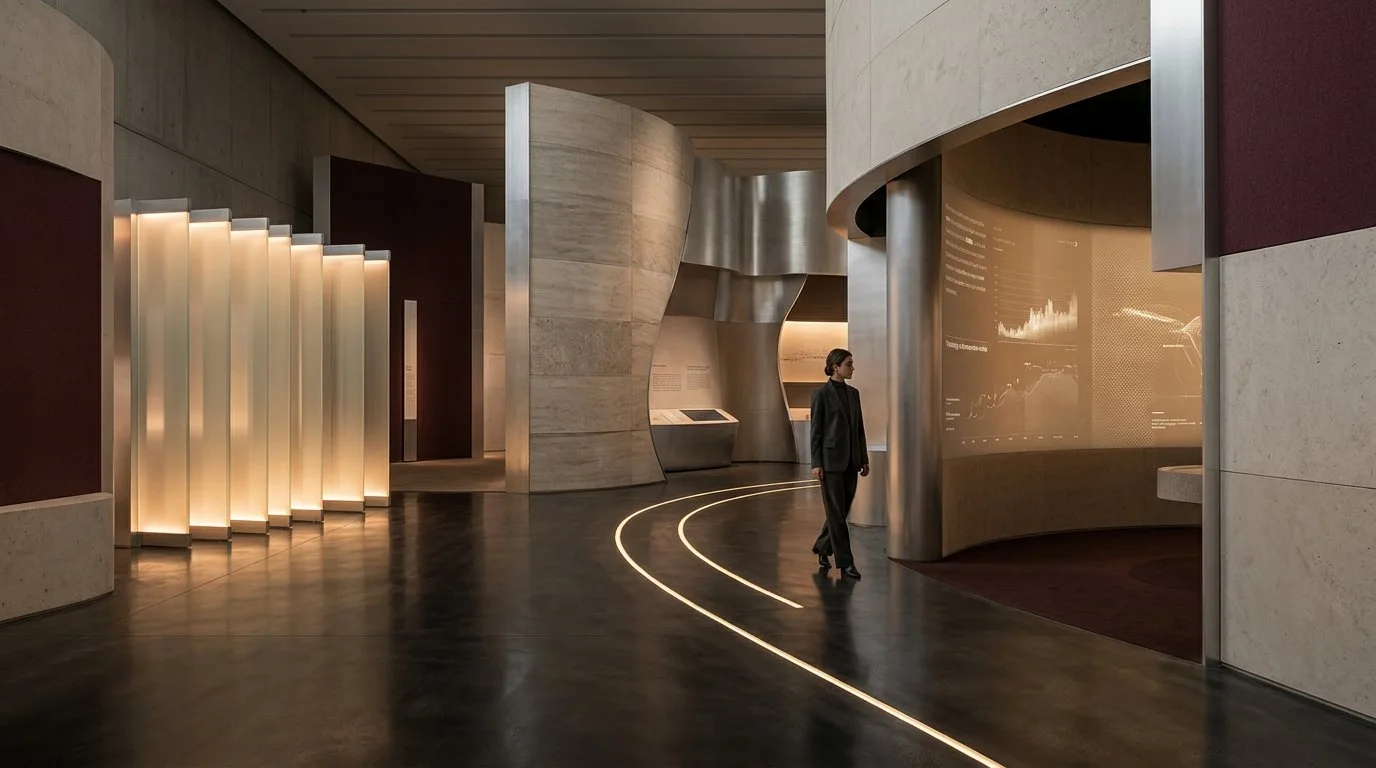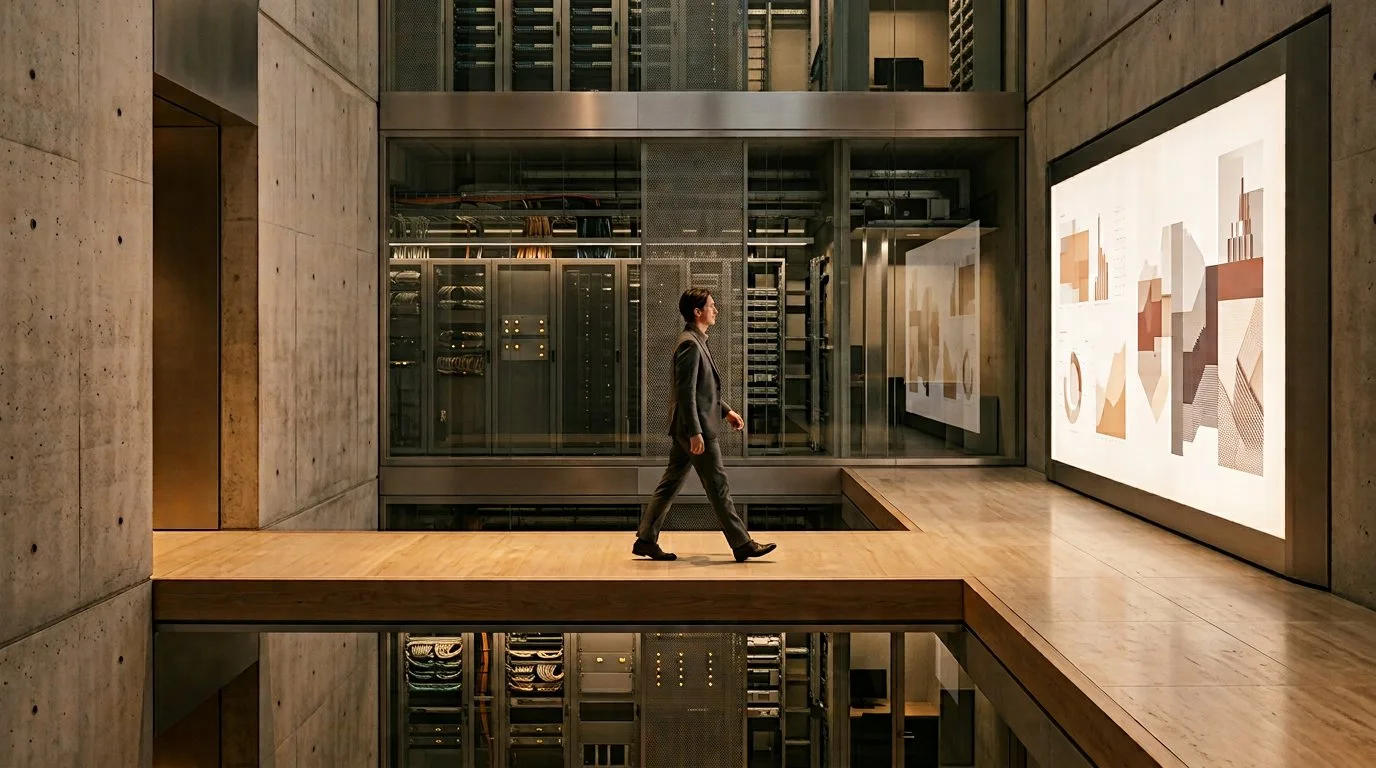
Complex enterprise systems working behind a simple human-centred experience.

Insight 04 / Enterprise Experience Design

Why Enterprise Experiences Fail

The problem is rarely a lack of technology. It is usually the distance between what an organisation intends and what people actually experience.

Abhijeet Varghese
Enterprise Experience · Creative Strategy · Digital Transformation
15 min read

Enterprise experience is a systems problem disguised as a design problem.

Enterprise experiences rarely fail because someone could not build them. They fail in the space between strategy and design, design and technology, leadership and execution—and between what the organisation wants to communicate and what people need to understand.

Systems do not fail in isolation.
They fail at the connections.

Enterprise experiences rarely fail because someone could not build them. The technology usually works. The screens turn on. The content loads. The application responds. The installation launches. And yet something feels wrong.

The organisation sees a project. The person sees a disconnected journey.

People do not understand it. Teams do not adopt it. The story changes from one touchpoint to another. Stakeholders disagree about what matters. Technology becomes more complicated than the problem it was meant to solve.

After working across creative, brand, immersive technology, physical environments, digital experiences and multidisciplinary teams, I have become convinced that enterprise experience is not a single-discipline problem. It is a connection problem.

The enterprise is not one experience.

A person can encounter an organisation through a website, email, sales presentation, mobile application, physical office, showroom, support interaction, product demonstration, event, training environment, service portal or a conversation with a person. Each may have been made by a different team, vendor, department, technology stack and timeline.

The person does not care who owns which component. They experience one organisation.

01

The Experience Fragmentation Gap

Internal organisational structure rarely matches external human experience. The larger the gap, the more fragmented the journey can feel.
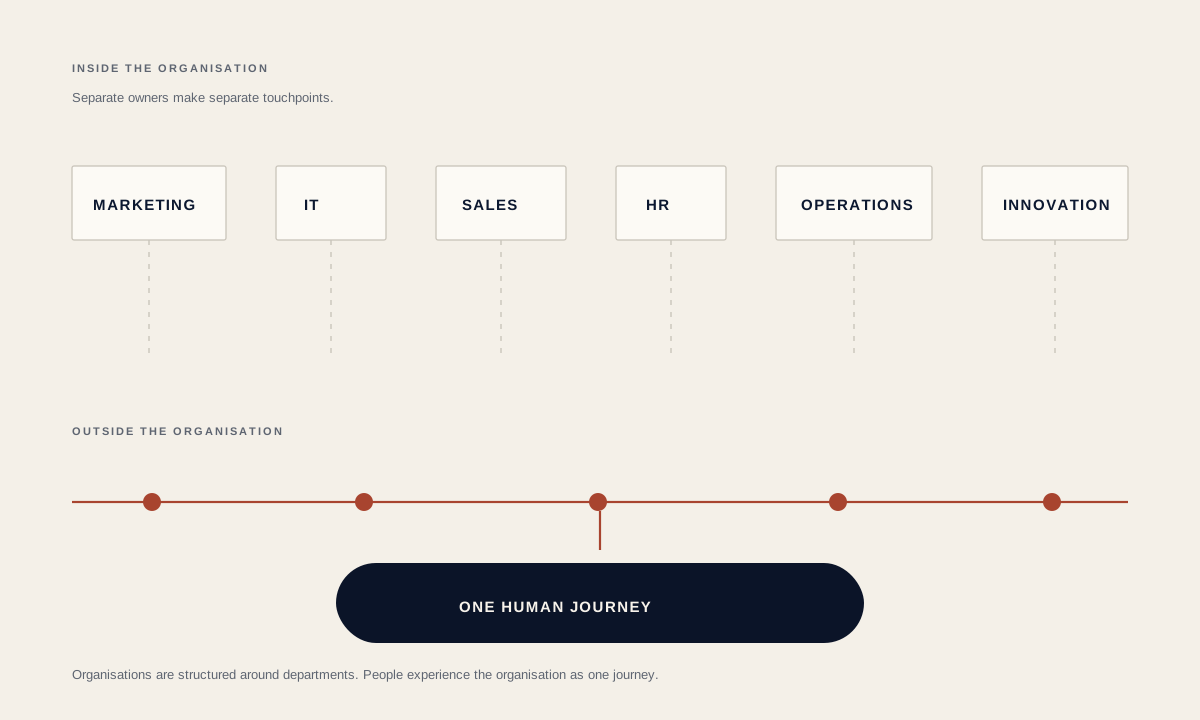
Marketing, IT, Sales, HR, Operations and Innovation appear as separate organisational systems. Their lines converge into one human journey.
Organisations are structured around departments. People experience the organisation as one journey.

The project is usually not the problem.

A project can launch on time, meet requirements, pass QA, satisfy a stakeholder and still create a poor overall experience. It may have optimised the project rather than the journey.

Project thinking asks, “Did we deliver what was requested?” Experience thinking asks, “Did the person get what they needed?” Those are not always the same question.

The enterprise brief is often too far away from the human.

“Digitally transform the customer journey.” “Create an immersive experience.” “Build an innovation centre.” “Develop an AI-powered platform.” These requests can be ambitious without explaining what a person needs to understand, do, feel or decide.

The missing layer is usually the human outcome. What should become easier? What should they remember? What behaviour should become possible? Without those answers, a team can end up designing the requested artefact instead of solving the problem underneath it.

02

The Enterprise Translation Layer

The strategic creative work happens in the bridge between business intent and what a person actually needs.
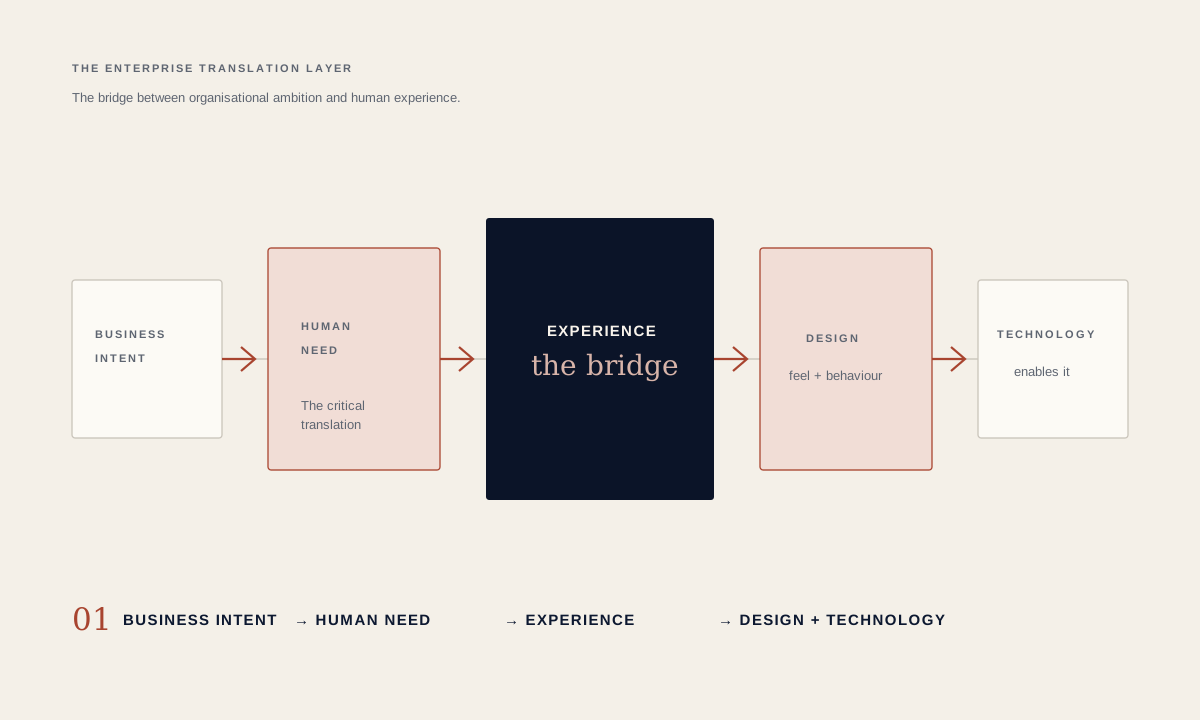
Business intent flows through human need and experience before design and technology. Human need and experience form the central bridge.
The dangerous shortcut is business request to technology. The better path makes human need and experience explicit.

The external view

Many systems. One person.

Every separate system may be rational inside an organisation. The experience fails when that logic becomes the person’s burden.

The work of enterprise design is not to deny complexity. It is to give complexity a coherent role in a journey.

Multiple enterprise departments and systems converging on one customer experience.
Different functions can remain distinct without forcing the person to navigate the seams.

Starting with technology turns an experience into a demonstration.

AI, VR, AR, spatial computing, interactive displays, digital twins, sensors and automation can all be useful. But the question “Where can we put it?” is weaker than the question, “What experience could not exist—or work as well—without it?”

Every technology needs a job. It might explain, demonstrate, personalise, connect, simulate, enable, automate or reveal. If nobody can describe that job in one sentence, it deserves another conversation.

“Technology without a human problem becomes a demonstration.”
The strategic filter

Designing touchpoints instead of journeys.

One team designs the website. Another designs the app. Another creates the showroom, presentation, campaign or VR experience. Each team can produce excellent work; still, the experience can feel inconsistent because each optimised a touchpoint while nobody owned the journey.

03

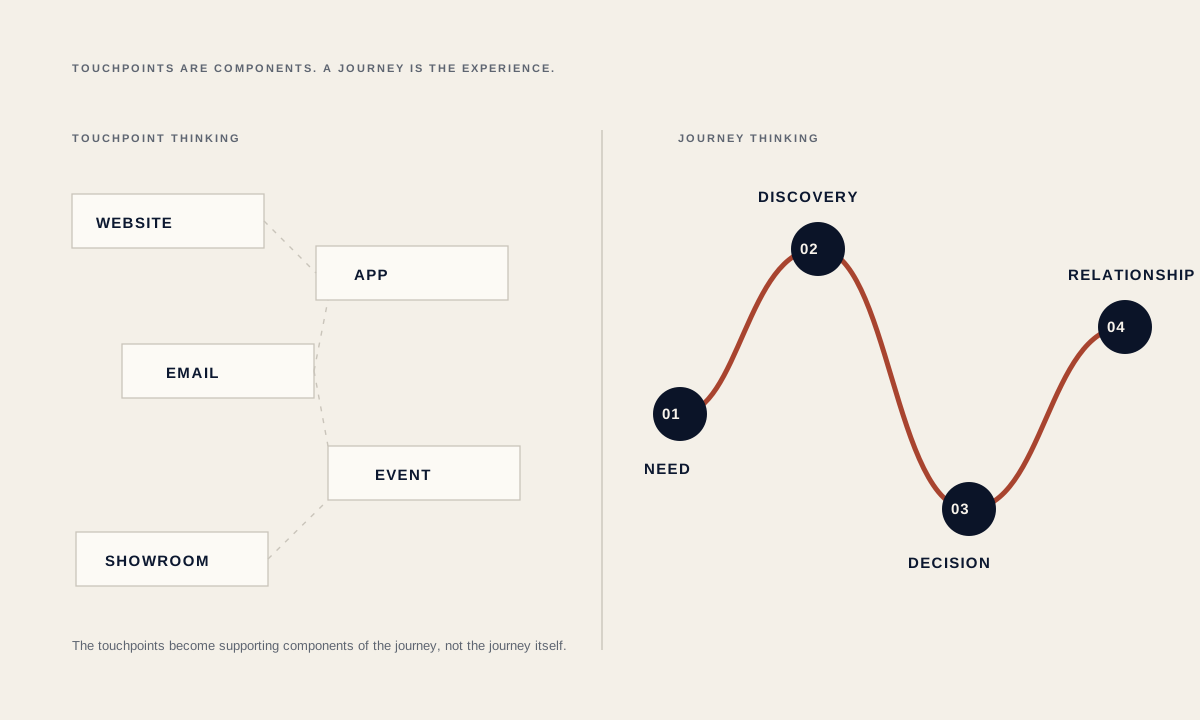
Touchpoint vs Journey

Touchpoints are supporting components. A journey gives them sequence, relevance and a shared point of view.

Separate website, app, email, event and showroom touchpoints are contrasted with a continuous journey from need through discovery and decision to relationship.
Journey thinking asks what happens before, during and after—not only what appears at a single moment.

Collaboration needs decision architecture.

Enterprise work brings together leadership, marketing, IT, operations, sales, legal, security, procurement, product, regional teams, agencies and vendors. Their perspectives are legitimate. But when every stakeholder has equal authority over every decision, the work becomes an accumulation of compromises: safe, generic, overloaded and unclear.

Good collaboration means that everyone knows what they own, influence and advise on—and who makes the final decision when the disciplines disagree.

04

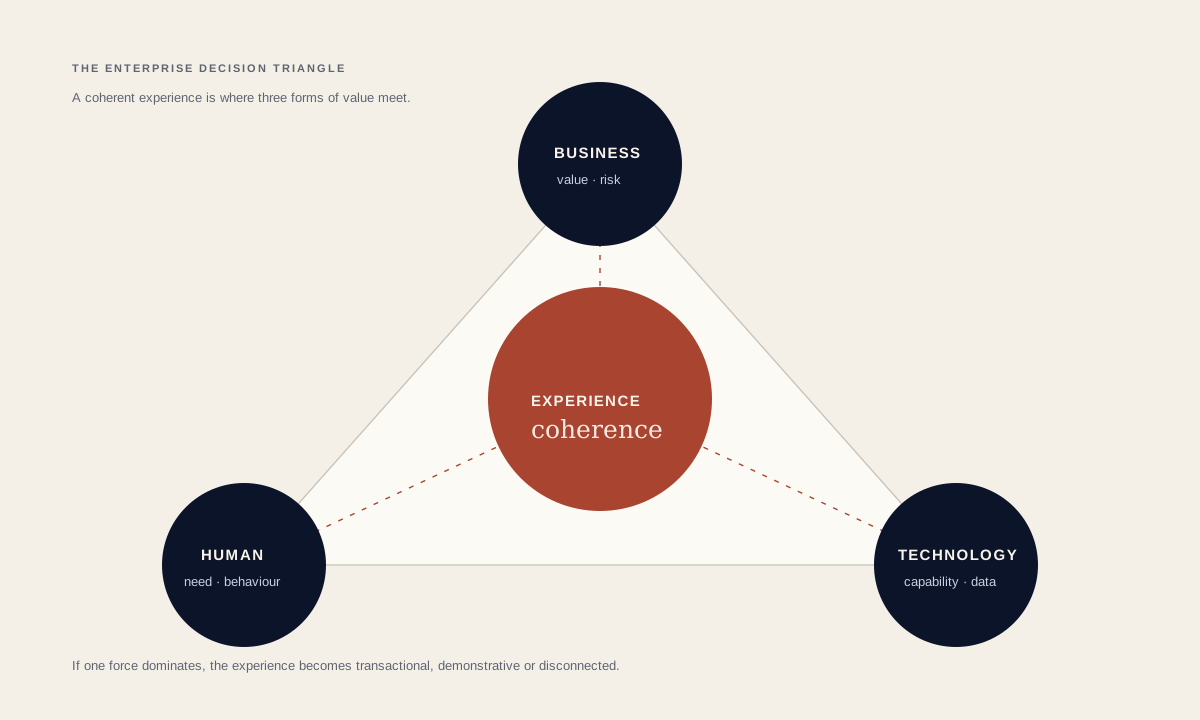
The Enterprise Decision Triangle

Business, human and technology value must remain connected. Experience is where they become coherent.

Business, Human and Technology form the three points of a triangle, with Experience at the centre.
If business dominates, the experience can become transactional. If technology dominates, it can become a demonstration.

A design principle for complex organisations

The more complex the organisation, the simpler the experience should feel.

That does not mean simplifying the organisation. It means absorbing complexity on behalf of the person.

Complexity can exist underneath. Clarity should exist above it.

Enterprise environments can include content systems, registration, displays, networks, sensors, automation, databases, media servers, VR hardware, physical controls, analytics and integrations. A visitor does not need to understand that stack. They need to know where they are, what is happening, what they can do and why it matters.

A sophisticated system can produce a simple experience. That is often the point.

05

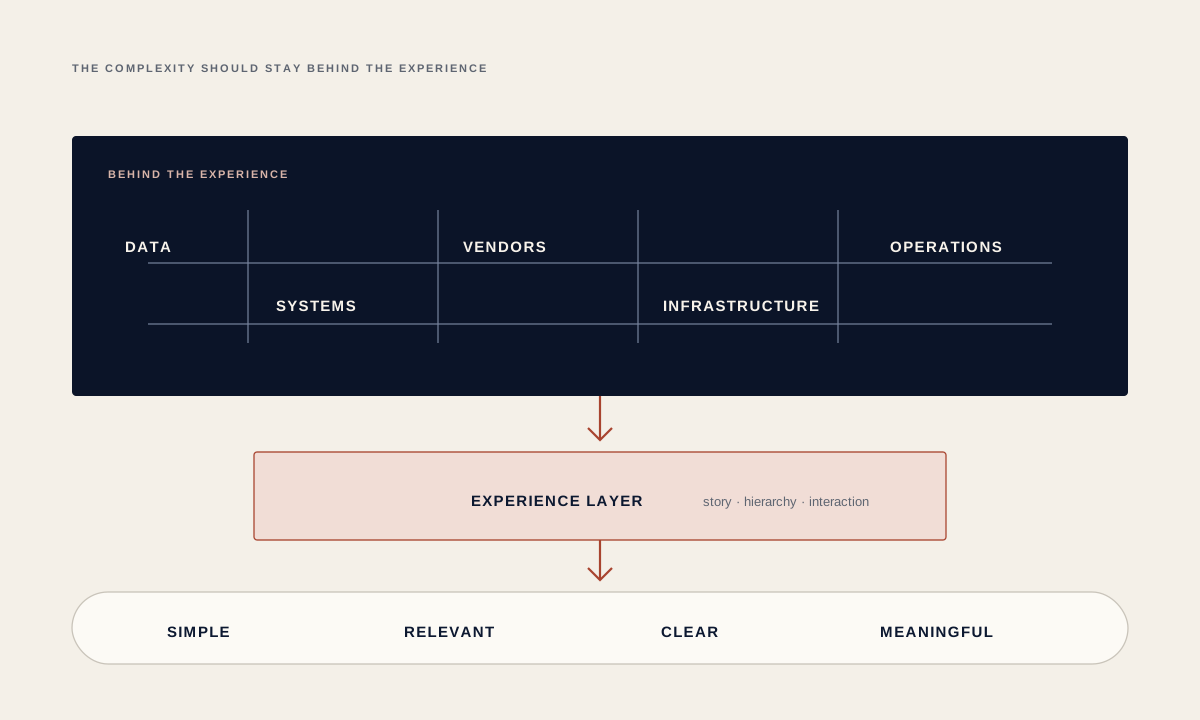
Hidden Complexity / Visible Simplicity

The more complicated the system underneath, the more important the translation layer becomes.

Technology, data, systems, vendors, infrastructure and operations sit behind an experience layer, producing a simple, relevant, clear and meaningful visitor experience.
Complexity stays behind the experience. Relevance, clarity and meaning reach the person.

Do not design only for the approval room.

The people approving a project and the people using it are usually different audiences. The executive approving a platform is not necessarily the customer. The IT leader approving training is not necessarily the trainee. Both perspectives matter, but they ask different questions.

06

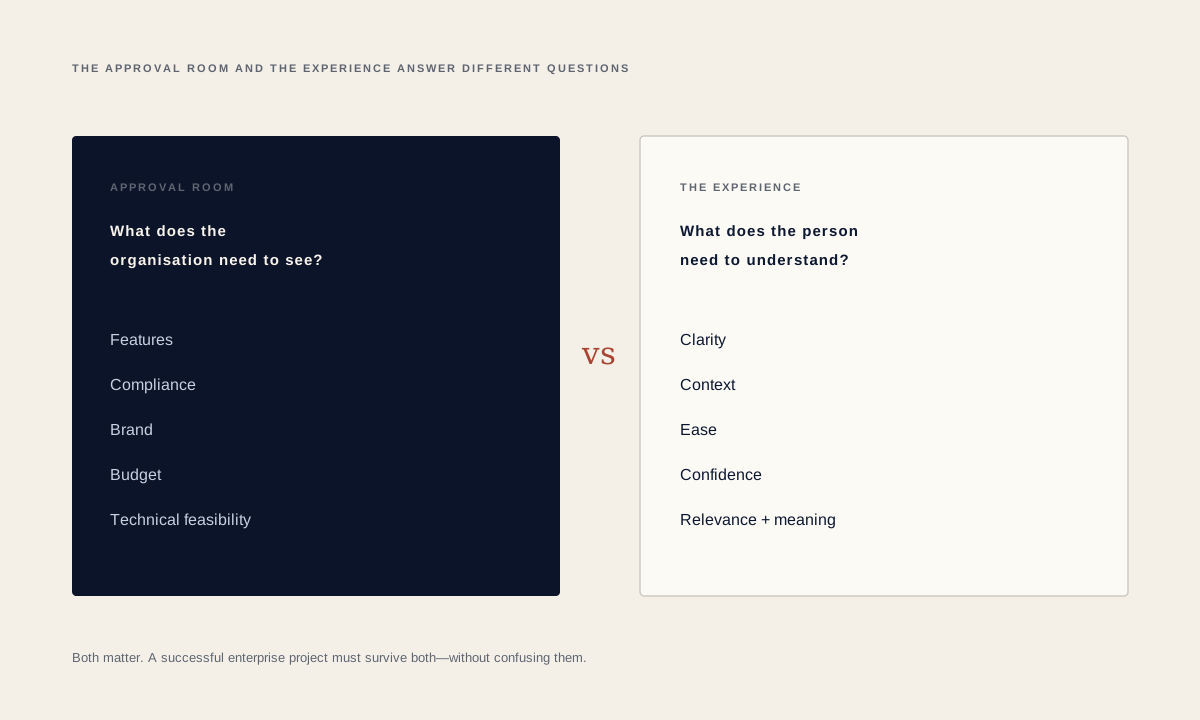
The Approval Room vs The Experience

A successful enterprise project has to survive governance and serve the person without confusing those needs.

Approval room concerns of features, compliance, brand, budget and feasibility are contrasted with experience needs of clarity, context, ease, confidence, relevance and meaning.
Approval validates viability. Experience validates understanding.
Business objectives, human needs and technology connected through experience design.
Creative leadership connects what an organisation needs with what a person can understand and do.

Experience as translation

Not decoration. A translation system.

The organisation speaks in strategy, capabilities, technology, processes and data. The person experiences questions, decisions, actions, emotions and relationships.

Experience design sits between those languages and translates one into the other.

Content is not decoration. Content is architecture.

When the platform is designed, the screens installed and the space built before someone asks what will go on it, the experience is already constrained. Narrative should influence spatial layout, interaction, hierarchy, screen placement, motion, pacing, navigation and technology choices.

Technology determines what can happen. Content determines what should happen. Design determines how it is experienced. Strategy determines why it matters.

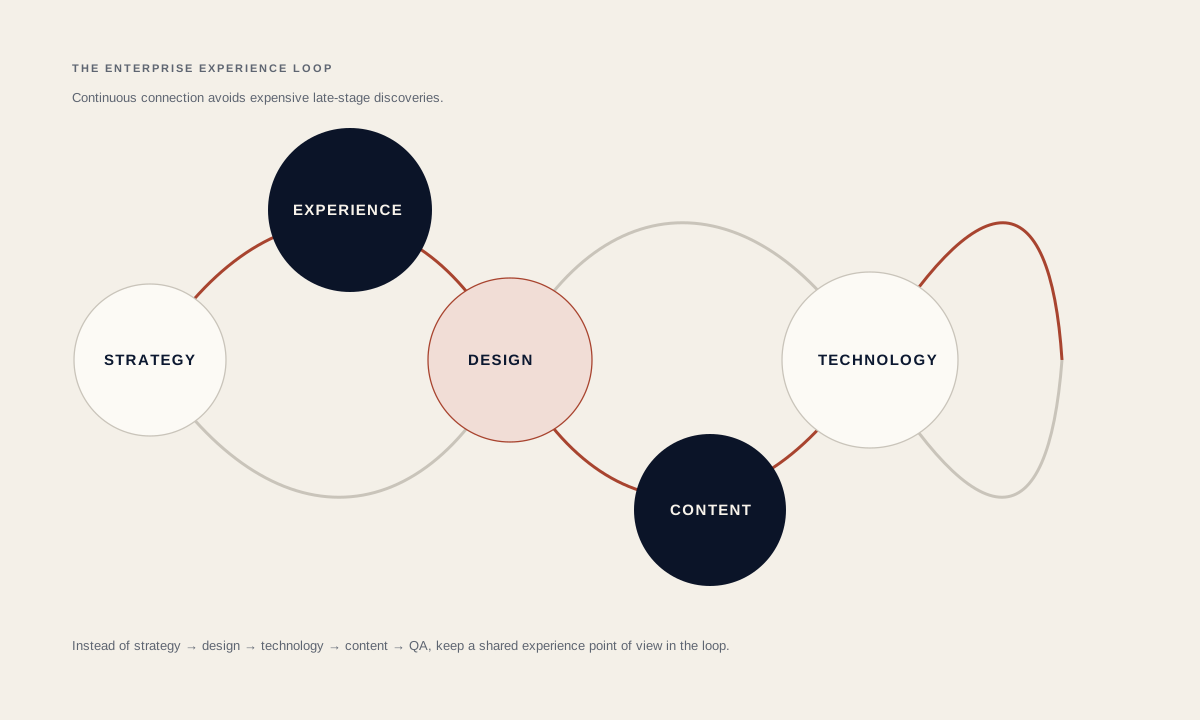
Design in loops, not departmental handoffs.

Sequential process is efficient only when the central problem is already understood. In enterprise experience work, strategy, experience, design, content and technology need early cross-disciplinary decisions, then continuous feedback.

07

The Enterprise Experience Loop

Every discipline remains distinct. Every discipline still understands the experience it is contributing to.

Strategy, Experience, Design, Content and Technology are linked in a horizontal interconnected feedback system rather than a sequential handoff.
Continuous connection makes the whole experience visible before late-stage changes become expensive.

No one owns the whole experience.

The website team owns the website. The technology vendor owns the installation. The brand team owns the guidelines. The content team owns the video. The architect owns the space. And the customer owns the confusion.

Enterprise experience needs an empowered person or team to maintain the experience point of view across disciplines—not to control every detail, but to protect coherence.

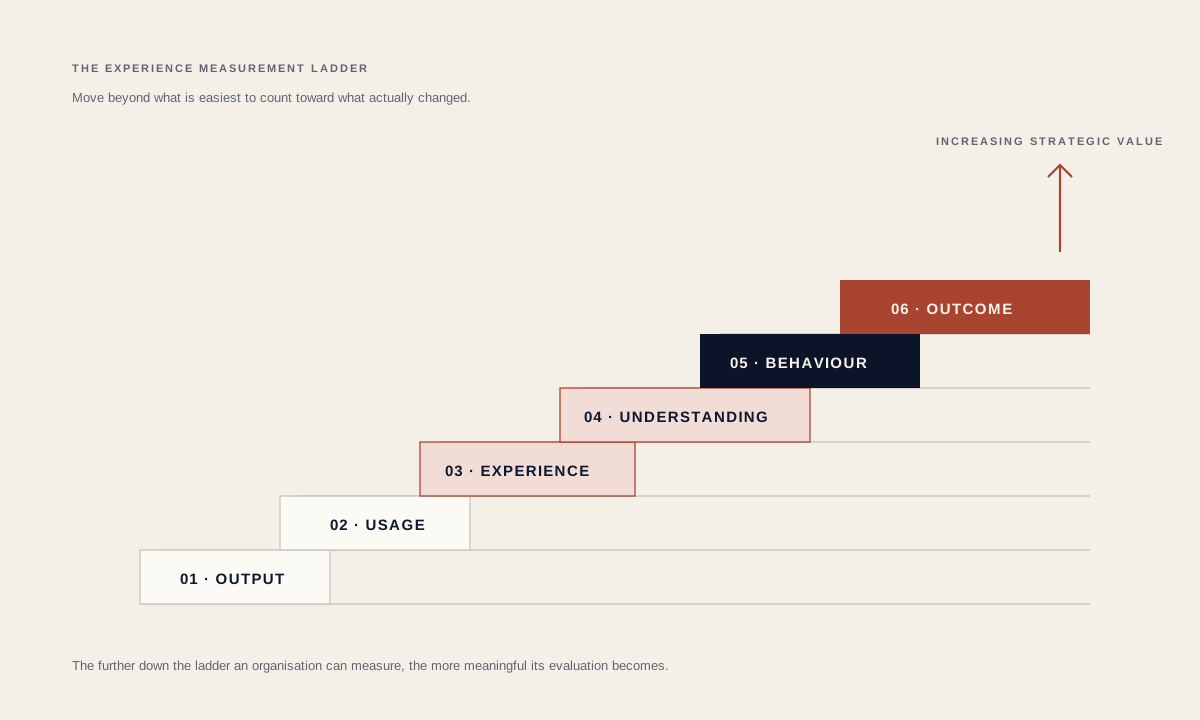
Measure the outcome, not only the output.

Numbers of screens, visitors, interactions, features or assets are useful, but not sufficient. Better questions are: Did people understand? Did the experience reduce friction? Did it create confidence? Did behaviour change? Did it support the objective?

08

The Experience Measurement Ladder

Measurement should follow the intended human outcome—not only the easiest available count.

Output, Usage, Experience, Understanding, Behaviour and Outcome rise in a ladder toward increasing strategic value.
The further down the ladder you can measure, the more meaningful the evaluation becomes.

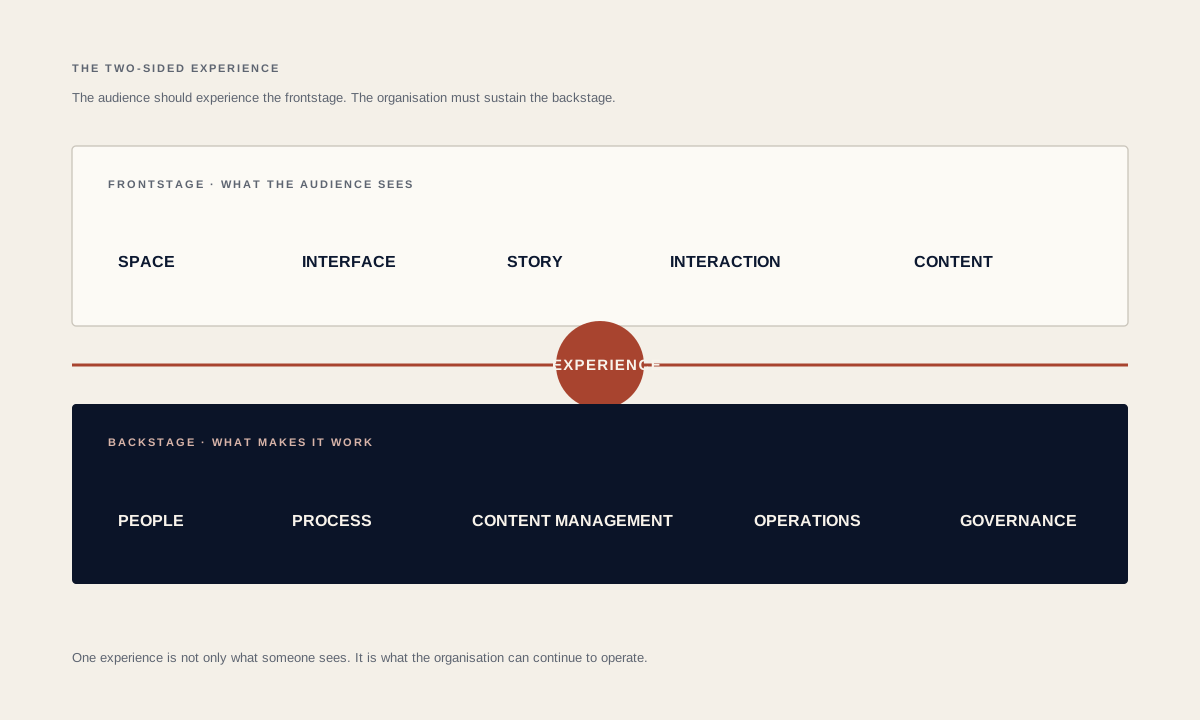
Design the frontstage and the backstage.

Someone updates the content, maintains the hardware, handles exceptions, manages data, trains staff, resets the system and responds when something breaks. If that operational layer is not designed, even a beautiful visitor experience gradually degrades.

09

The Two-Sided Experience

The audience should experience the frontstage. The organisation must be able to sustain the backstage.

Audience-facing space, interface, story, interaction and content appear on a frontstage layer. People, process, content management, operations and governance appear backstage, together forming one experience.
An experience is not only what a person sees. It is what the organisation can operate over time.

That same translation is visible in the BPCL Palakkad experience, where complex industrial information needed to become visual storytelling, spatial communication and accessible understanding—not simply more information on a wall.

Experience orchestration

Different expertise. One direction.

Creative leadership is increasingly systems leadership: protecting the connection between strategy, brand, content, interfaces, physical environments, technology and operations.

The question is no longer only “Does it look good?” It is “Does it connect?”

Creative, technology, content and business systems orchestrated into one enterprise experience.
Coherence is the result of independent systems understanding their role in the same human journey.

Framework 10 / The hero framework

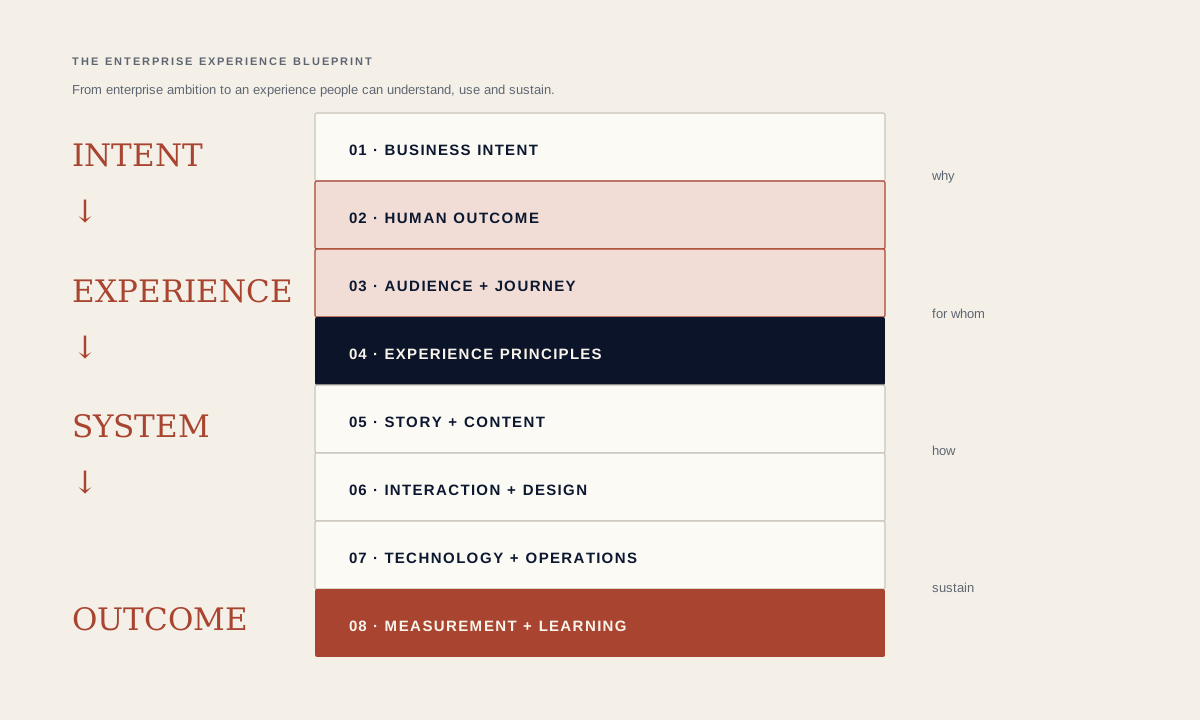
The Enterprise Experience Blueprint

Before production becomes a collection of deliverables, establish a shared path from business intent to human outcome, operations and measurement.

The Enterprise Experience Blueprint connects Business Intent, Human Outcome, Audience and Journey, Experience Principles, Story and Content, Interaction and Design, Technology and Operations, and Measurement and Learning.
The full model: intent becomes a designed, operated and measured human experience.

Before launch

The Enterprise Experience Audit

Open each question before adding another technology layer, another feature or another deliverable.

Strategy

What business problem are we actually solving—and how would a person recognise that it has improved?

Audience

Who is actually experiencing this? Not “customers” or “employees”, but which people, in what context, with what needs?

Journey

Where does this experience begin and end? What happens before, during and after the visible moment?

Story

What should a person understand, remember or feel confident enough to do?

Interaction

What should people be able to do, and what feedback lets them know the system has understood them?

Technology

Why does this technology belong here? What human outcome becomes better because it is present?

Content

What information carries the experience, and is it shaping the architecture early enough?

Operations

Who keeps it working, changes it, supports it and recovers it after launch?

Measurement

Which human and business outcome defines success beyond adoption, clicks or the number of things delivered?

Ownership

Who protects coherence when individual teams optimise their part of the system?

Final thought

Enterprise experiences fail when organisations optimise their parts instead of designing the connection between them.

Behind the experience can be a system of enormous complexity. In front of the person, it should feel simple. That is the real work: owning the outcome, not just the deliverable.

The Insight Series

One philosophy. Four perspectives.

Technology becomes valuable when human intent, creative judgment, memorable experience and enterprise systems are designed as one connected whole.